
Looking East
Part One: Seoul, South Korea

It’s been over a month since my trip across the Pacific. On Monday, May the 4th, my mom, sister, and I flew to Seoul, South Korea to visit my brother who’s been living there the past year. He’s in the Air Force and got time off from the base in Osan to be with us, to explore the great city of Seoul over the course of four days before we flew to Tokyo, Japan, where we spent five days doing the same, then flying home, my sister, mom, and I back to the States, my brother the base.
Words like “unforgettable,” “memorable,” “incredible,” and the like fail to accurately describe this trip. I had never been to Asia before, had long dreamed of traveling there, especially to Tokyo, and truly thought I’d never get the chance to. But after nearly a year of planning, email correspondences, itinerary research, and a fifteen-and-a-half-hour plane ride, I was finally standing across the pond, soon to discover places, people, food, entire worlds that defy the imagination.
In the weeks since returning home, I’ve been reminiscing on my trip through the hundreds of photos I took over the ten days I spent in Korea and Japan—time stamps of an experience I’ll carry for the rest of my life. But to further immortalize these memories, I wanted to make a couple posts cataloging some of the photos I took, if anything to serve as a Substack scrapbook that I can revisit time and again and remember in greater detail the wonder I witnessed firsthand. What follows is not a comprehensive record of my trip, but rather a visual diary of sorts—a collection of moments, details, impressions that impelled me to pull out my phone and capture them.
This first installment focuses solely on Seoul, a city of ancient palaces, mountain views, neon-lit streets, and remarkable contrasts, seen through my eyes as a first-time visitor.
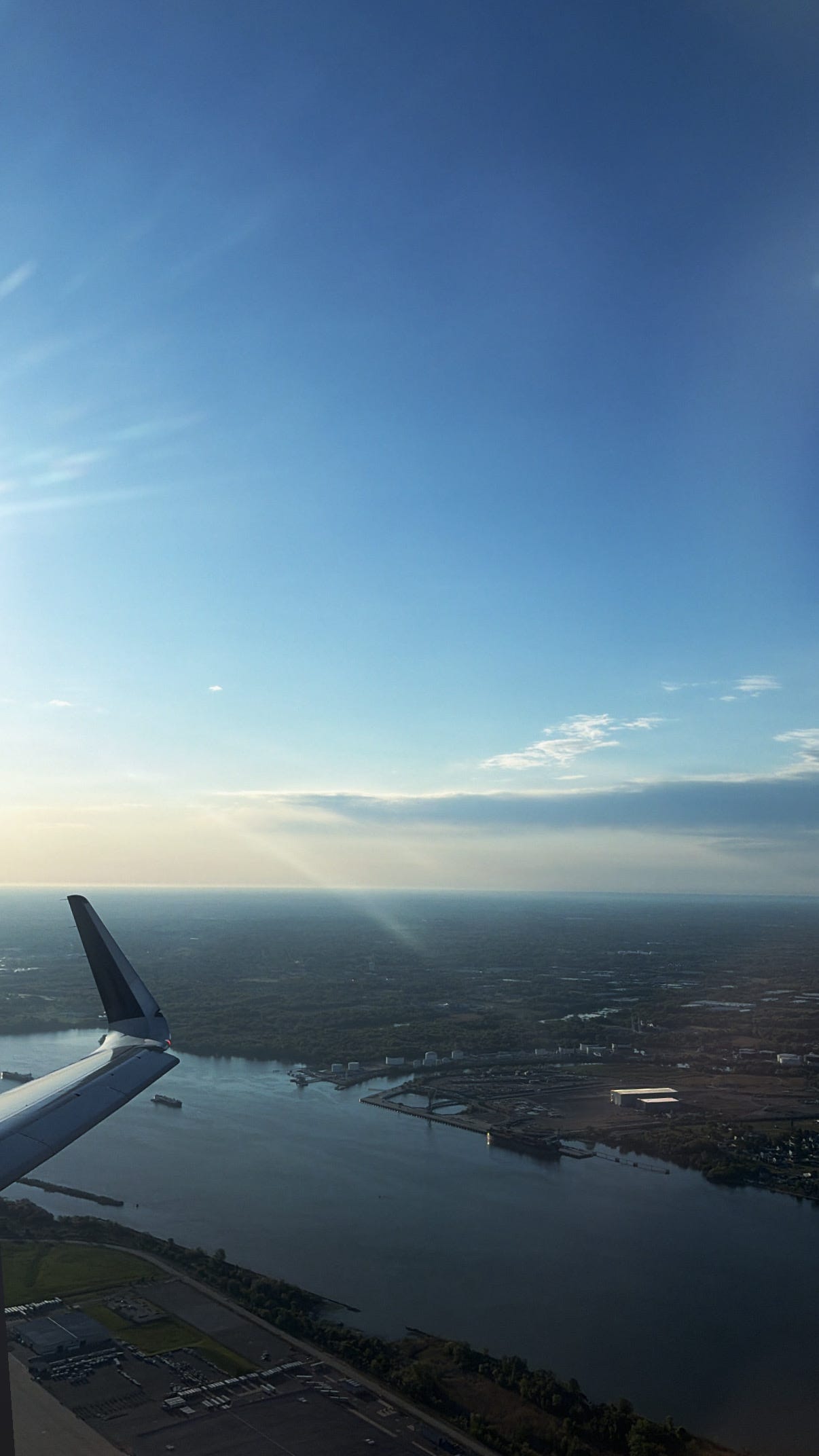
From the window of my flight from Philly to Atlanta, where I met up with my mom and sister to fly over to Seoul together—a flight I nearly missed. My plane out of Philly was an hour-and-a-half delayed, and I arrived in Atlanta after my flight to Korea had already started boarding. I arrived at Terminal A and my connecting flight boarded at Terminal F. For those unfamiliar with the Atlanta airport, it is absolutely massive (literally over 7 square miles), and these terminals, A and F, are at opposite ends of the airport. My only bags were carry-on, a shoulder-strapped suitcase and large fanny pack, which bounced heavily as I dashed through the airport, first to the metro on the lower level, which took me to the other end of the port, then up to the upper levels (inadvertently thrashing bystanders on the escalators) and across the kilometer-long sprint to the last gate in the terminal. My sister laughed at me, huffing and puffing, sweating profusely, as I took the seat across the aisle from her.
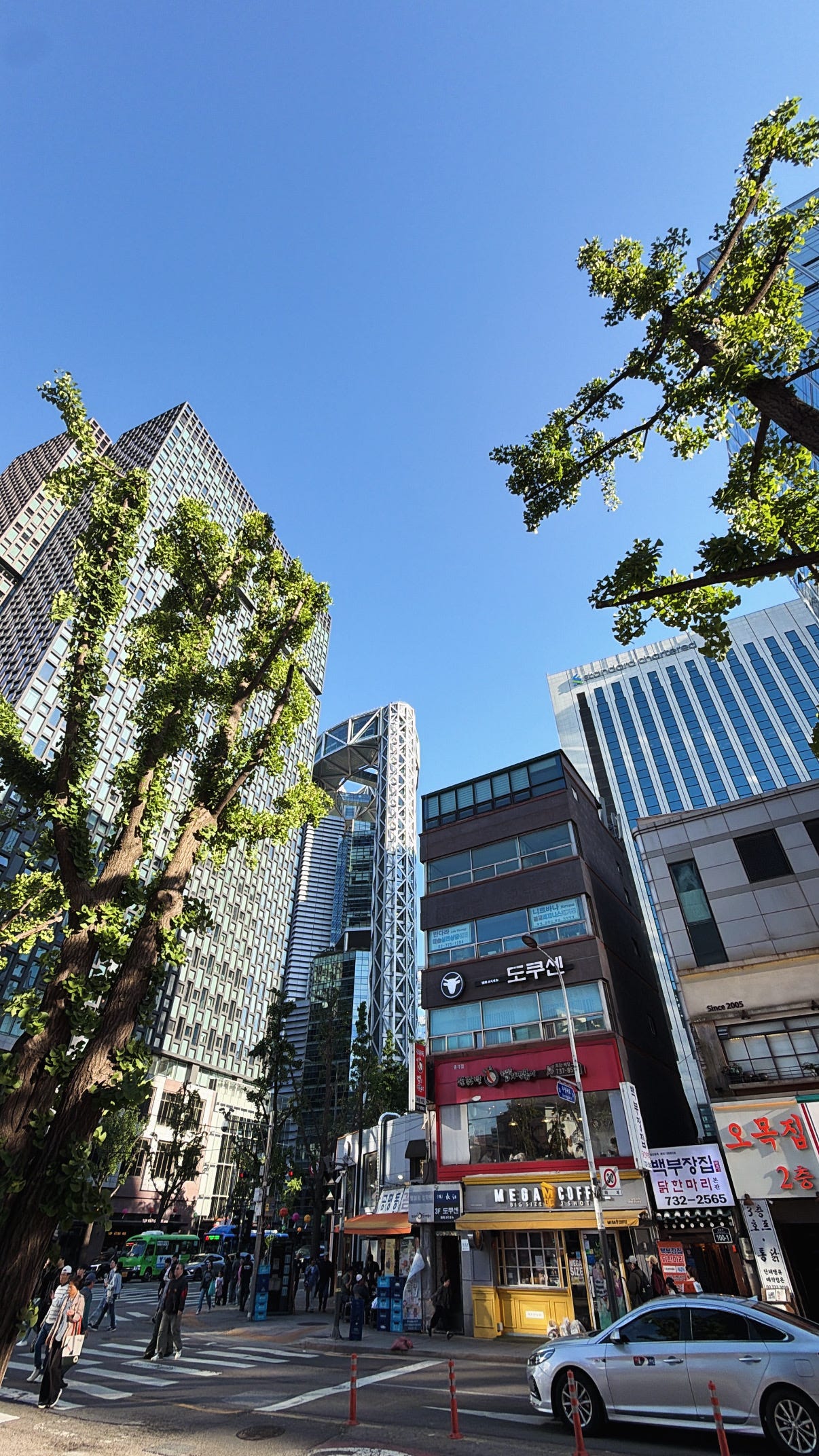
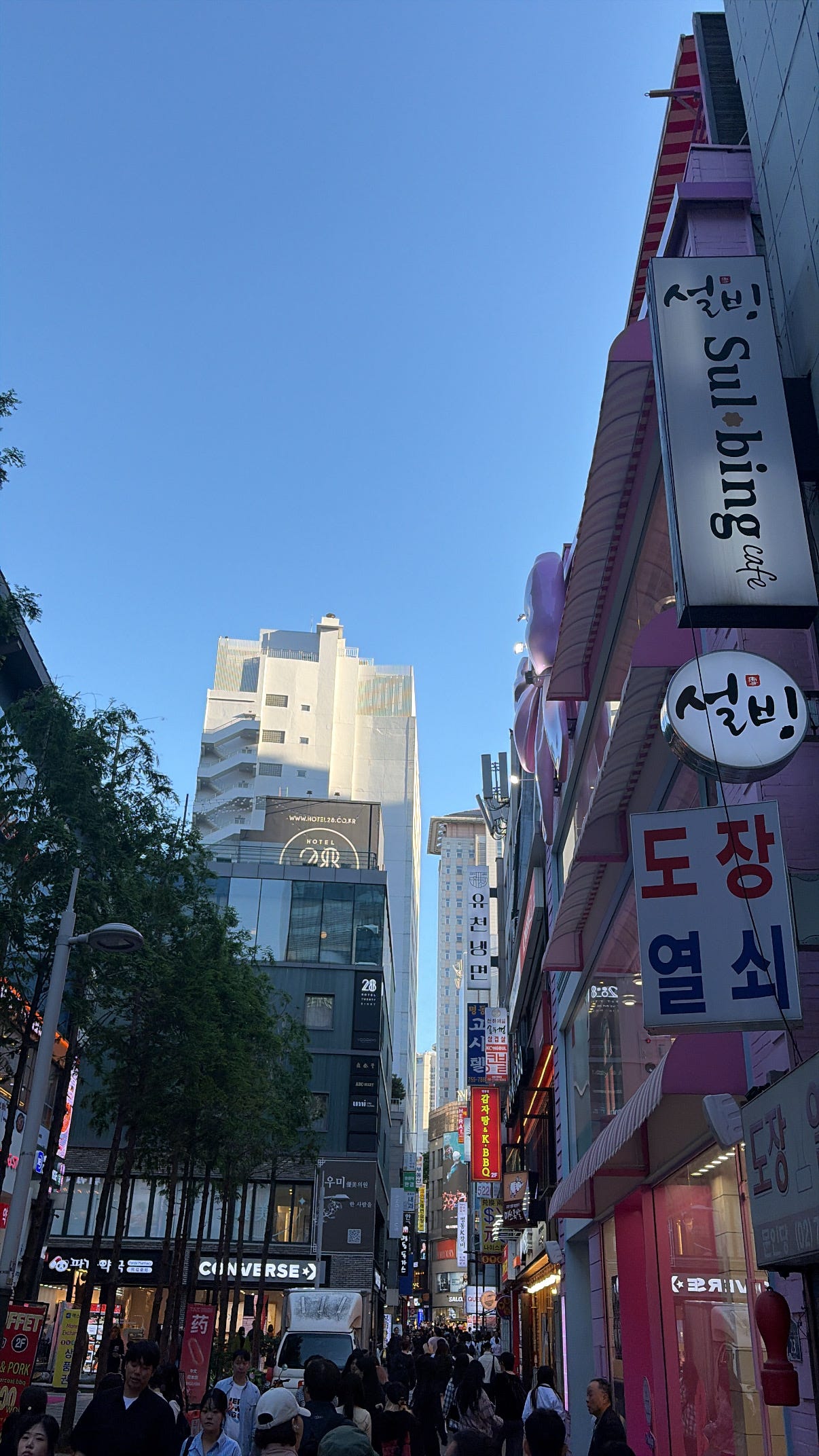
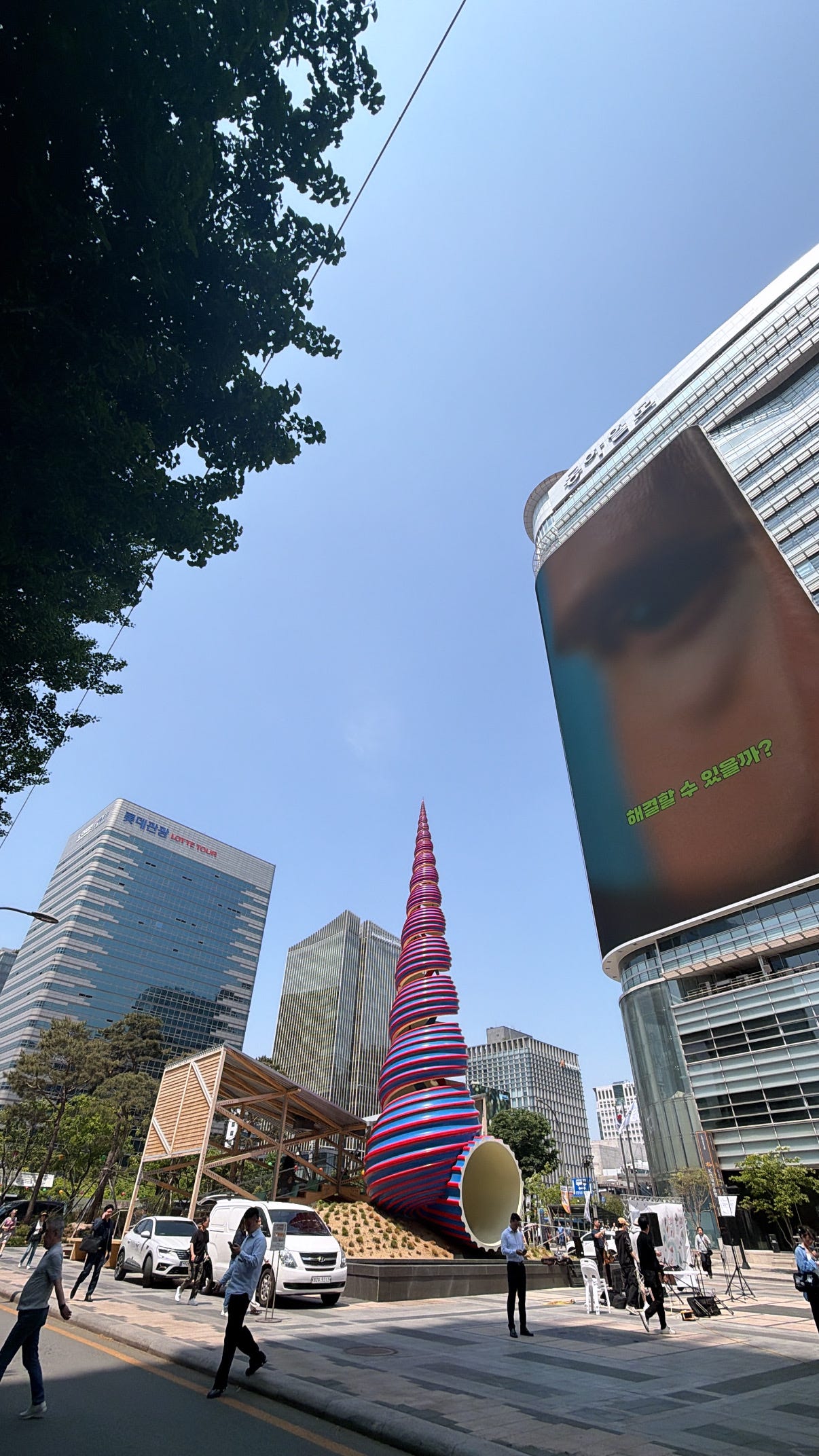
We stayed at the Shilla Stay Gwanghwamun, a huge hotel located in the heart of Seoul, around which the city expands in circular undulations, towering buildings between whose innovative brutalist architectures peek the mountains which surround the city. The streets sprawl throughout, ways wending from roads to footpaths to plazas replete with incredible sculptures, including the multi-colored horn pictured here: Spring by Claes Oldenburg, unveiled in 2006 and standing in Cheonggye Plaza. The other two photos are from Myeong-dong, one of Seoul’s most famous shopping districts, where vertical signs, cosmetic stores, cafés, retailers, street vendors, and food carts mix with a crowd whose density never seemed to waver.
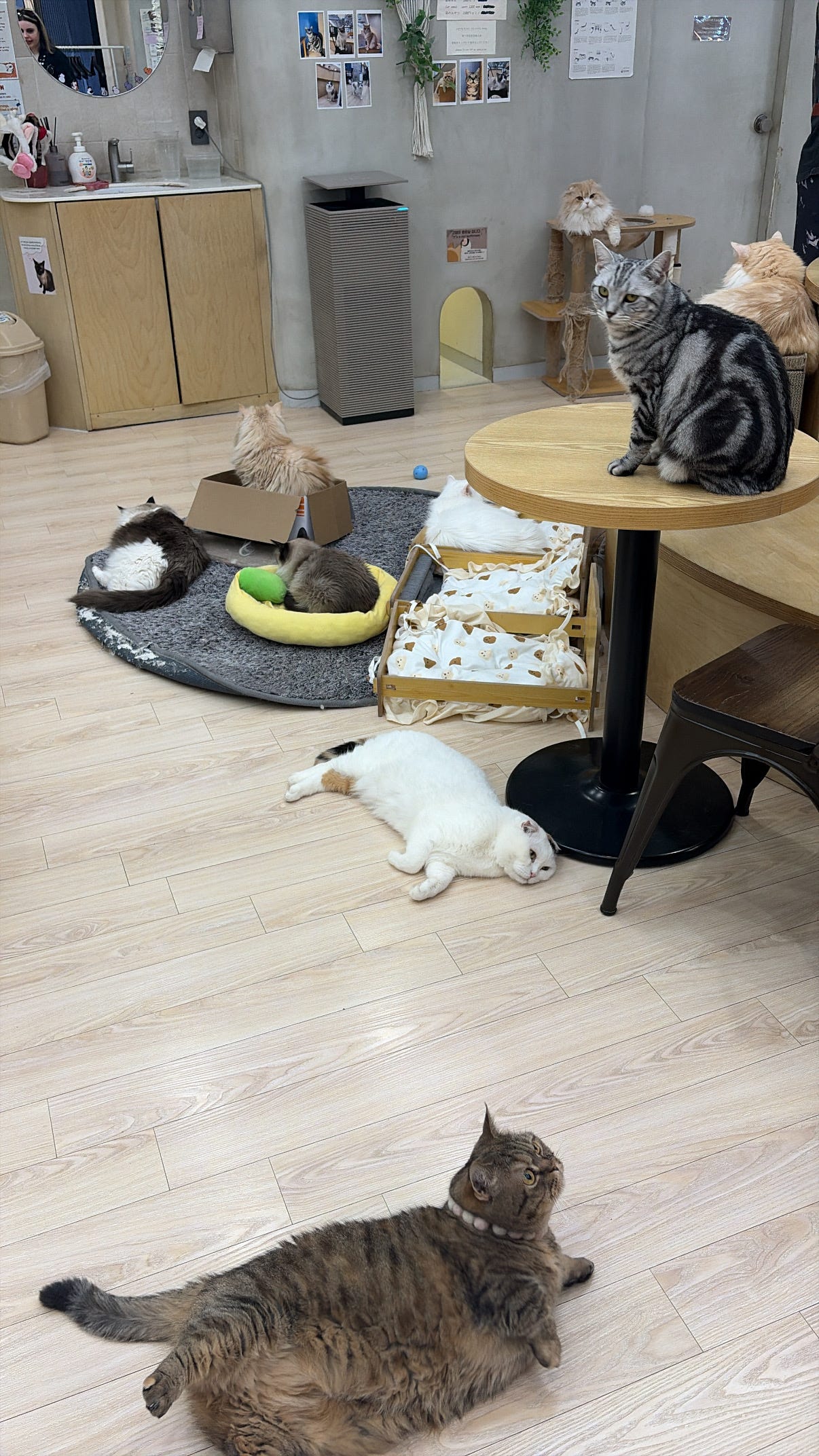
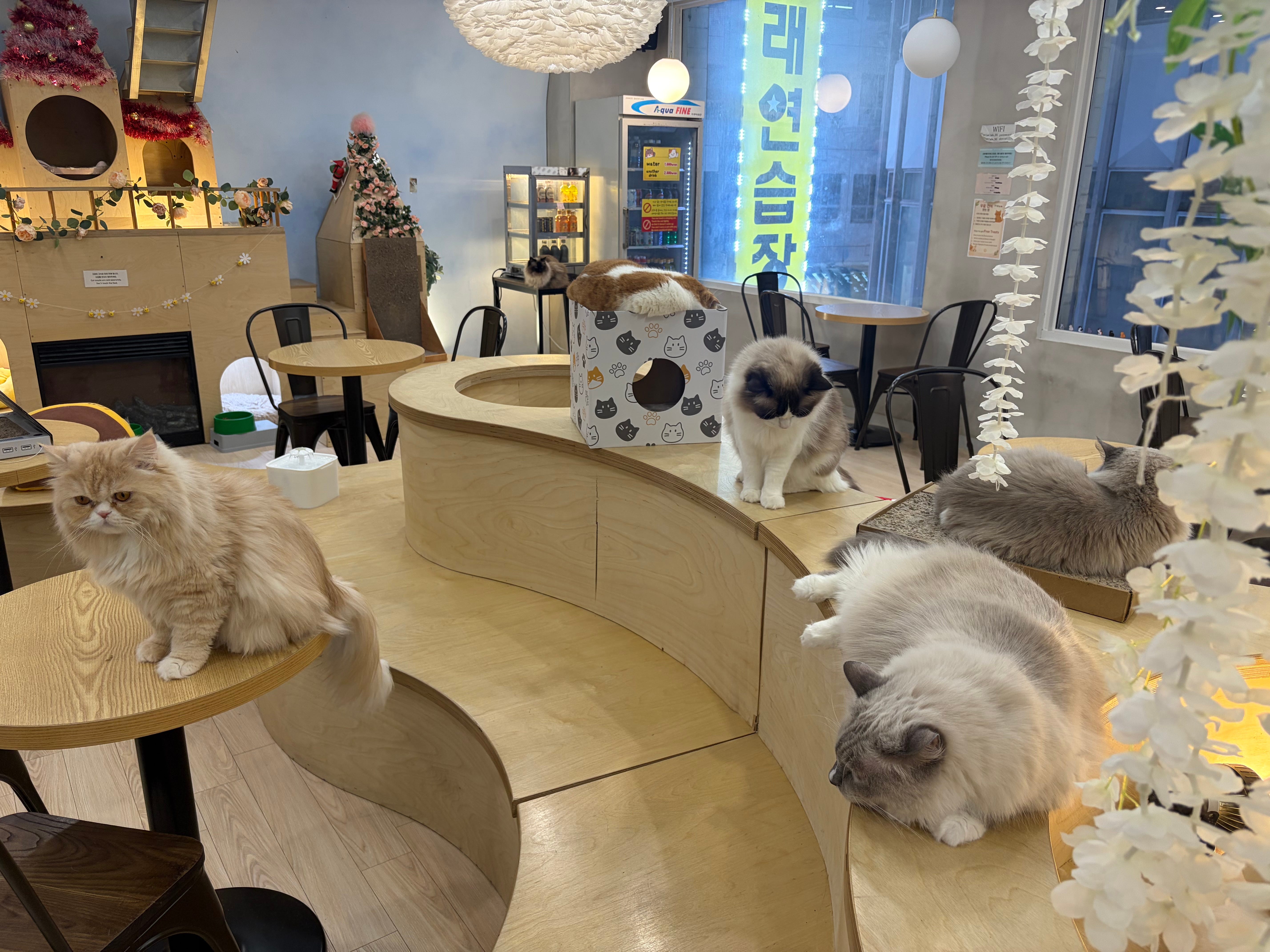
One of the places we visited in Myeong-dong was a wonderful little café at the top of a four-story walk-up, whose coffee was not the main attraction but rather the many cats that live there. We had to remove our shoes and wash our hands before mingling, treats in hand, with the twenty-or-so cats, some of whom were so sweet and others not so much. As a cat lover, it was truly a highlight.
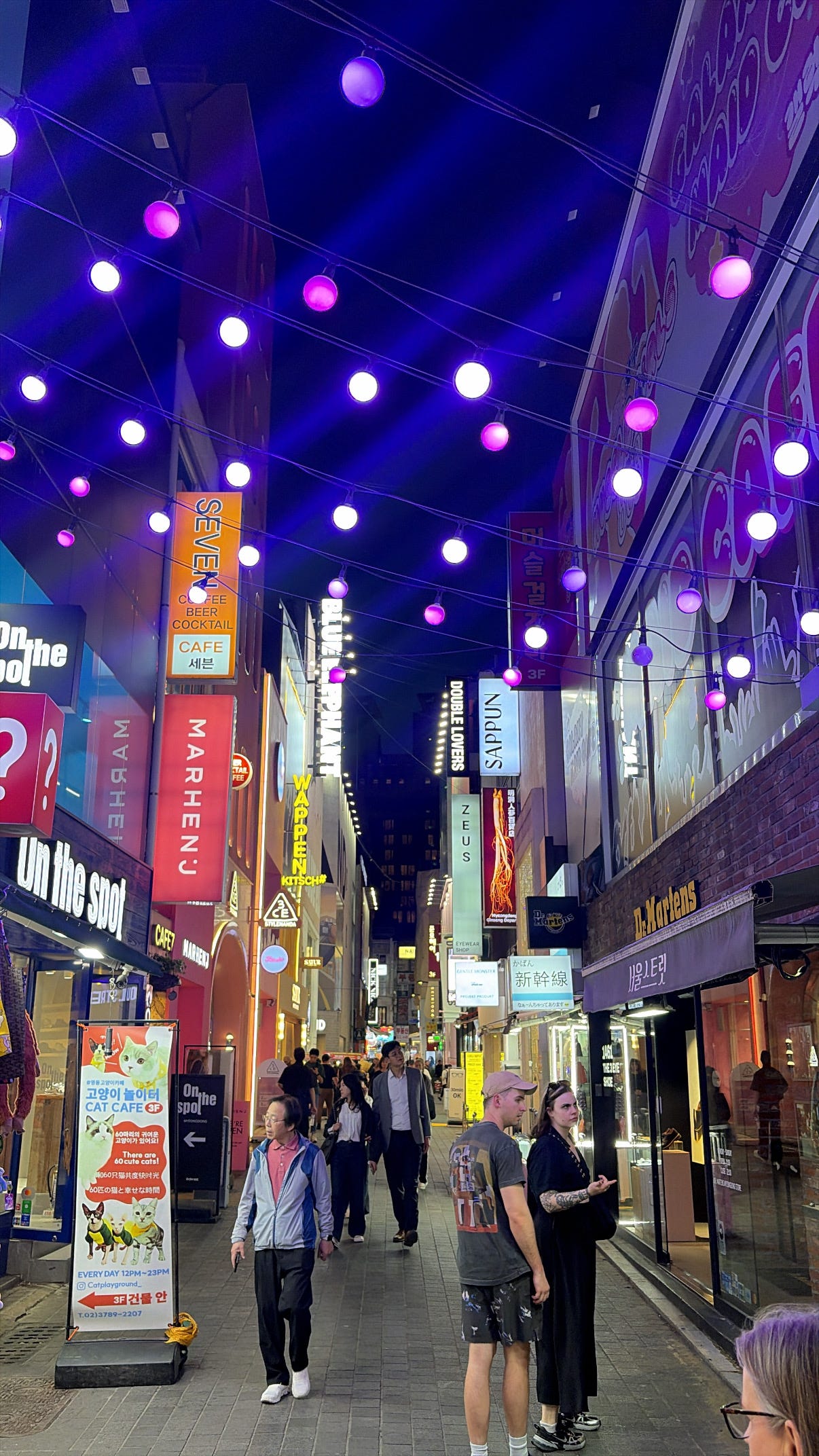
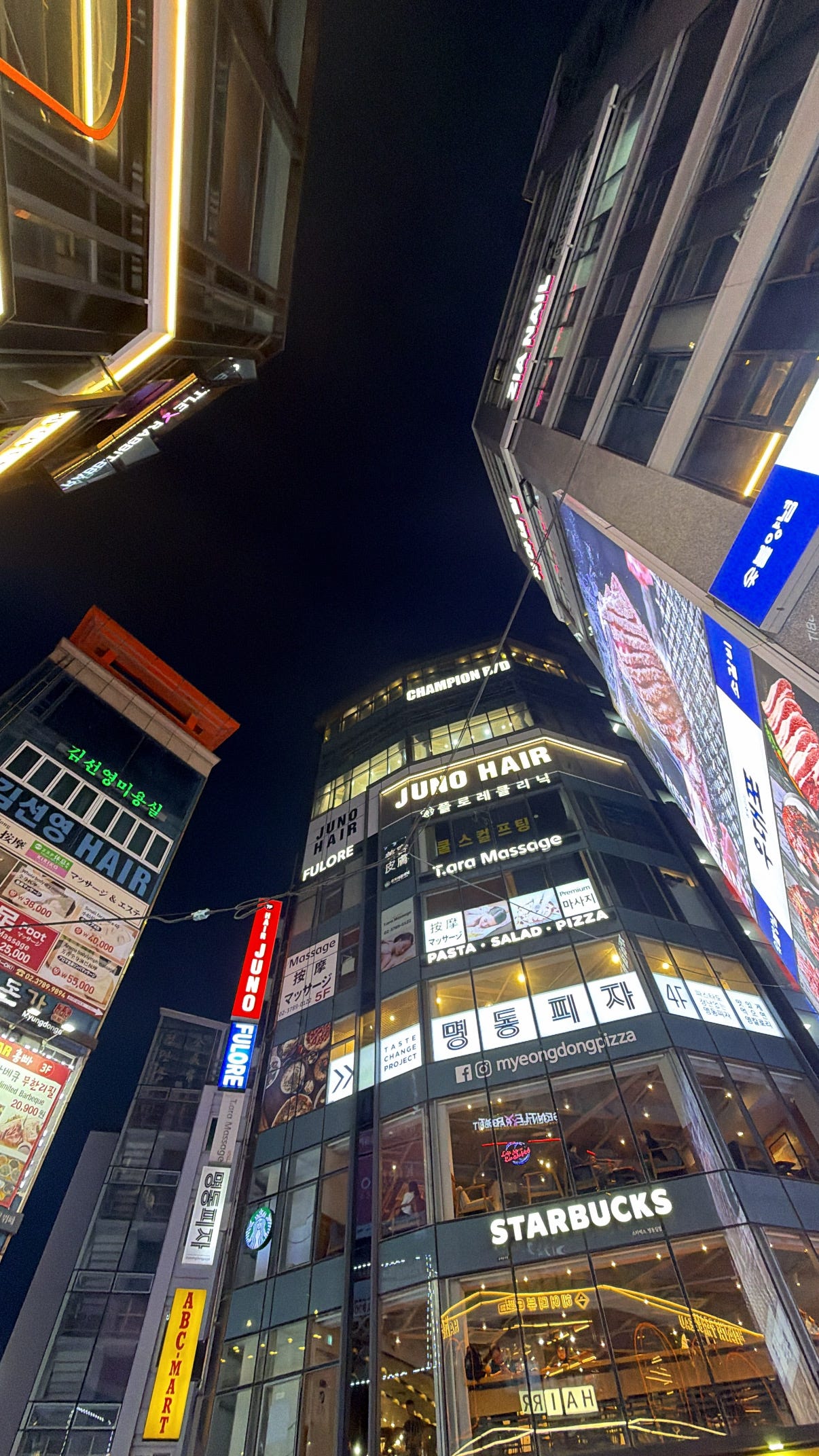
More photos from Myeong-dong. At night, the crowds corral; the lights blaze; the haze that hangs off the countless food carts lining diagonal alleyways and side-streets is rife with the smell of spice; laughs, jovial shouts, singing, chanting, chatting, and music fill the airspace, their jumbled echoes ricocheting off the sides of the buildings towering above, windows multiplying neon lights in mirror-like sequences shifting in sync with each footstep.
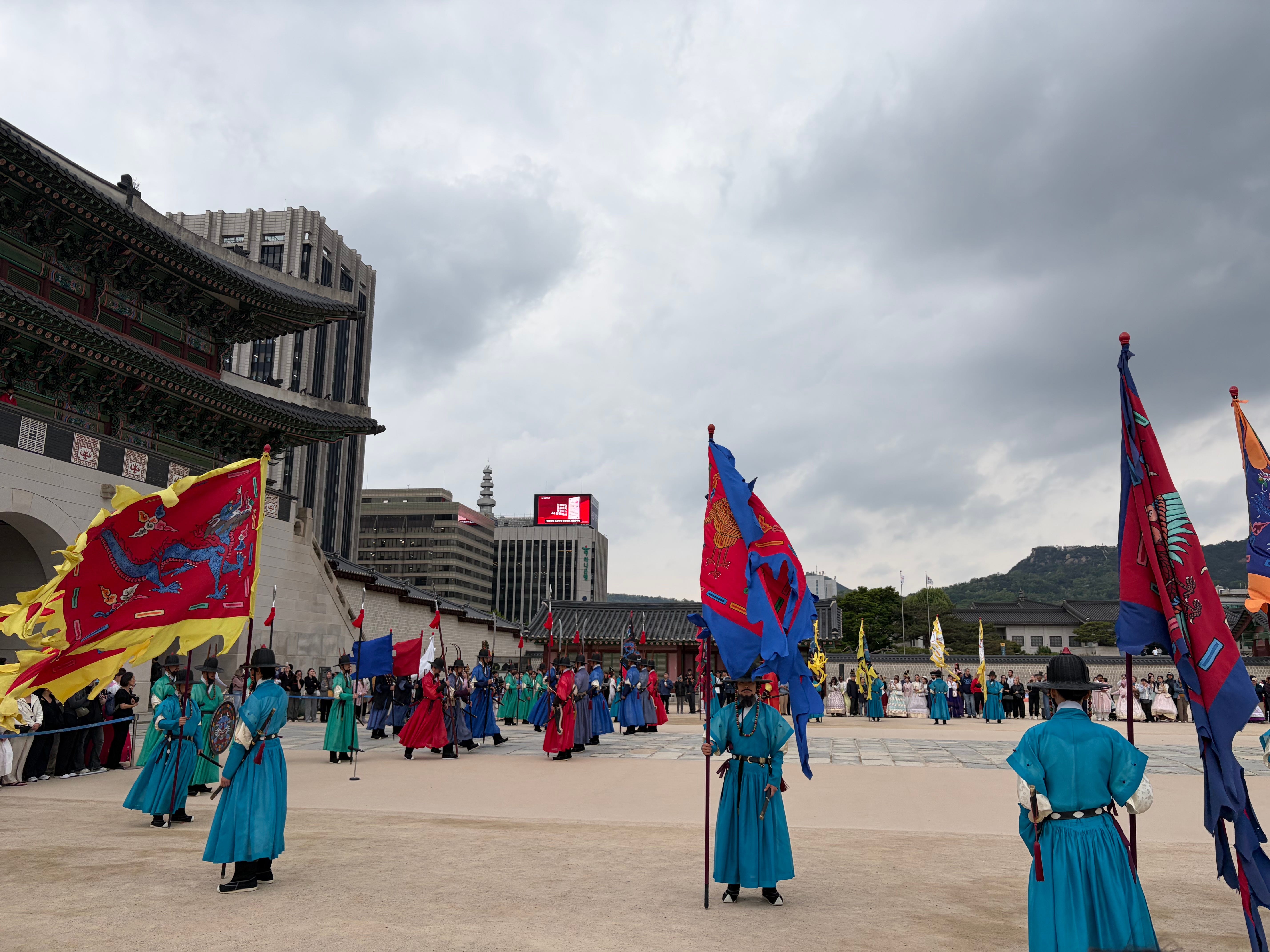
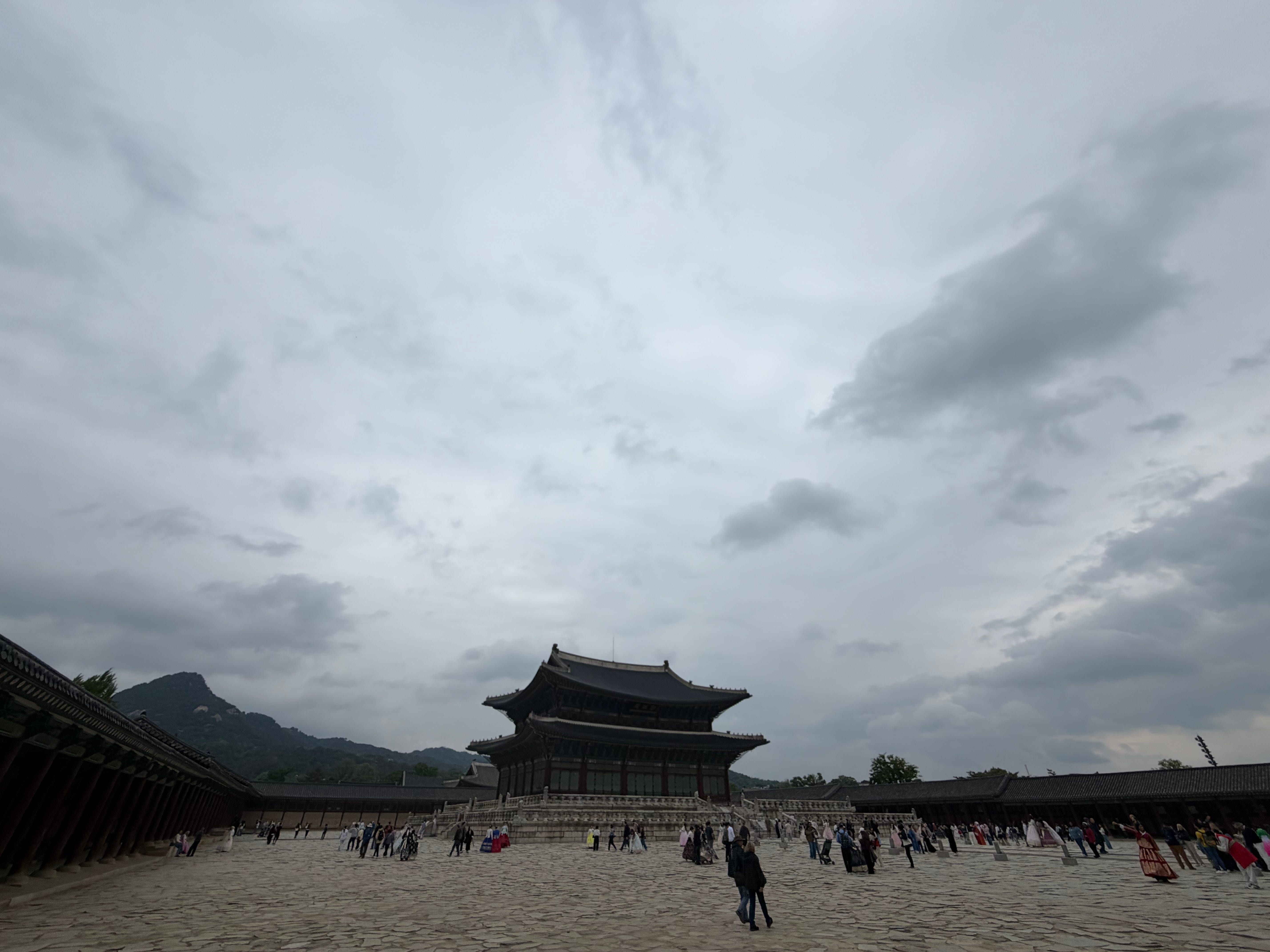
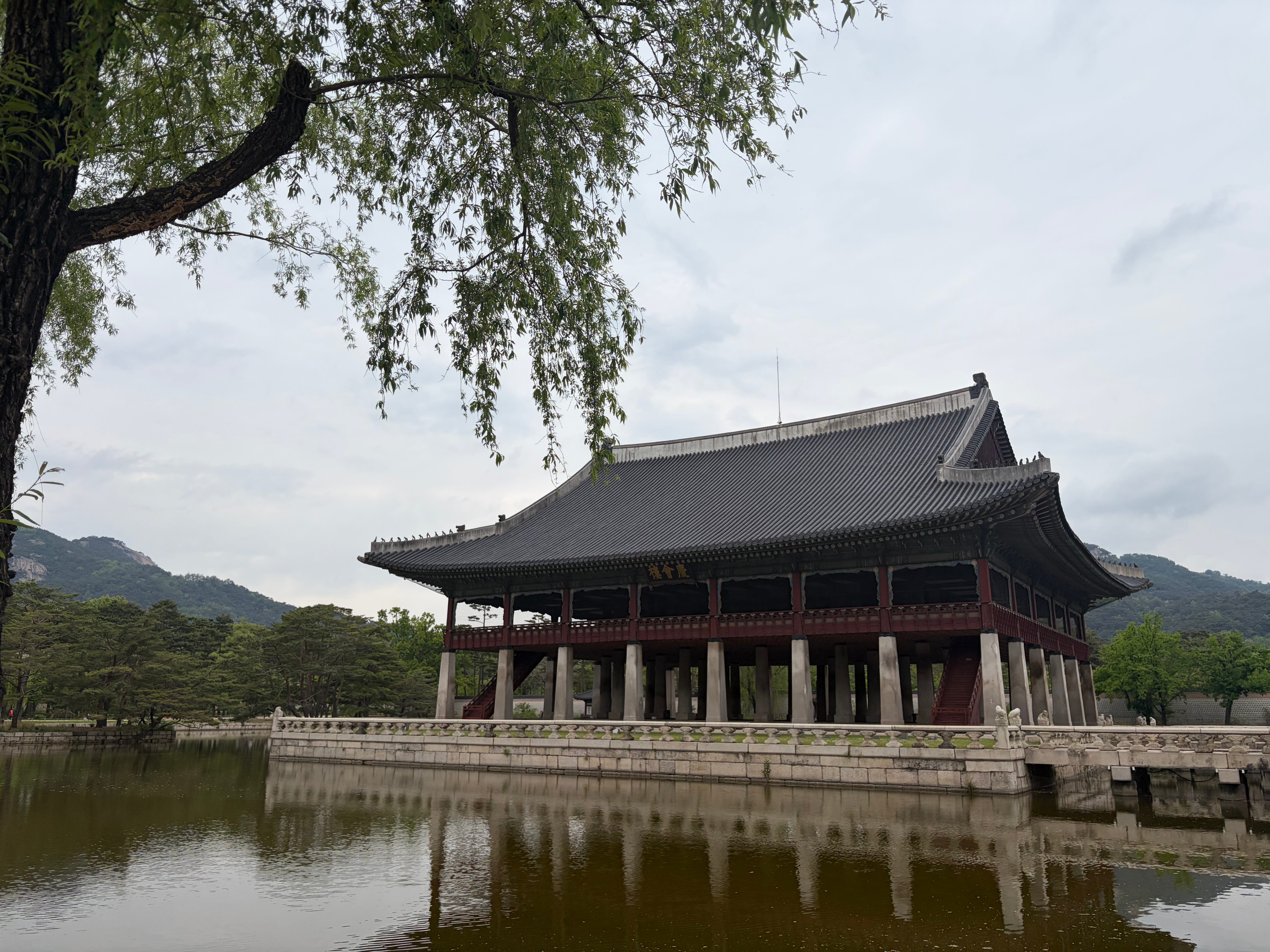
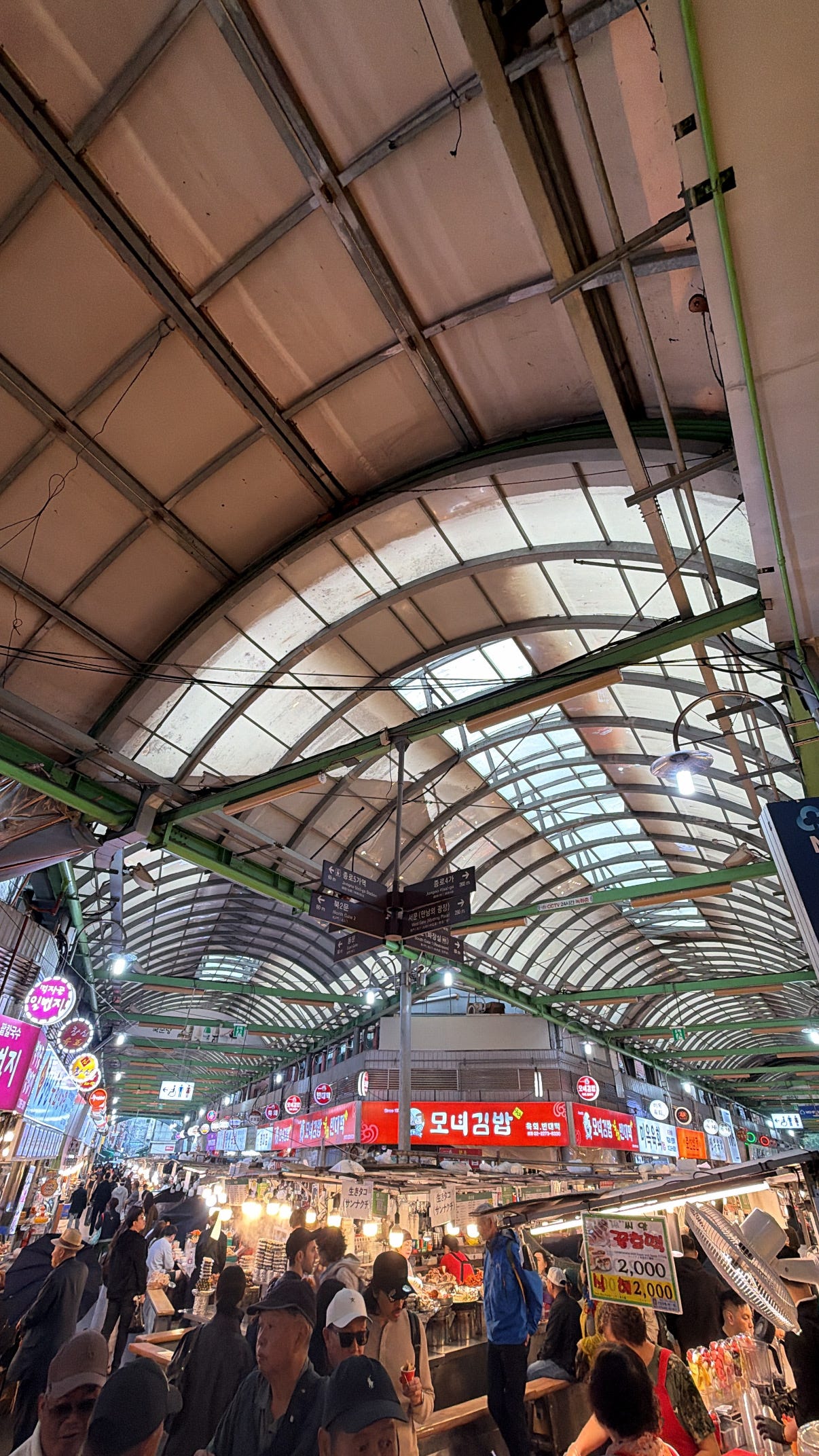
On our last full day in Seoul, we took a planned tour. Our guide, named Matt, met us near city hall, and we piled into a van that took us to Gyeongbokgung, the first royal palace of the Joseon dynasty, established in the year 1395. Gyeongbokgung is enormous: the palace grounds stretch nearly 101 acres (like 75 football fields in area) which contain hundreds of structures spread across its vast walled-in compound. We arrived just in time to catch the changing of the guard ceremony, which occurs twice each day, a magisterial reenactment of the formal guard-changing rituals of the Joseon dynasty which was awesome to witness. After wandering the grounds, taking in the elaborate architecture and exquisite scenery, learning about the history of the Palace all the while, we went to a Ginseng Museum, which was quite fascinating, and then went to Gwangjang Market—one of the oldest and largest markets in Korea, housing more than 5,000 vendors and shops. We stayed to one street-level segment, but the place was absolutely alive with thousands of shoppers, workers, and tourists mingling, chatting, buying, eating. Coming from Philly, it reminded me of Reading Terminal Market but multiplied by a hundred. It was ecstatic.
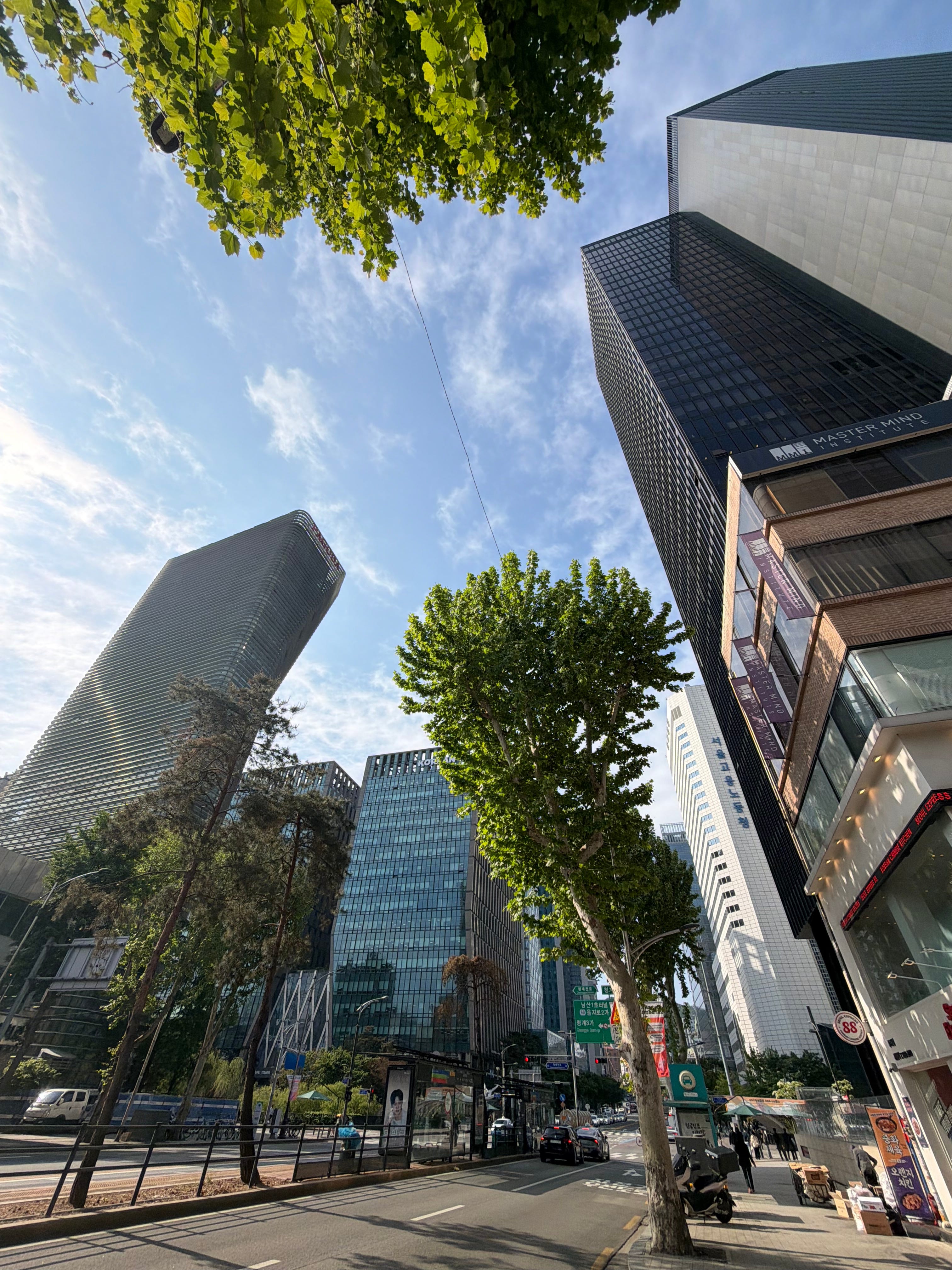
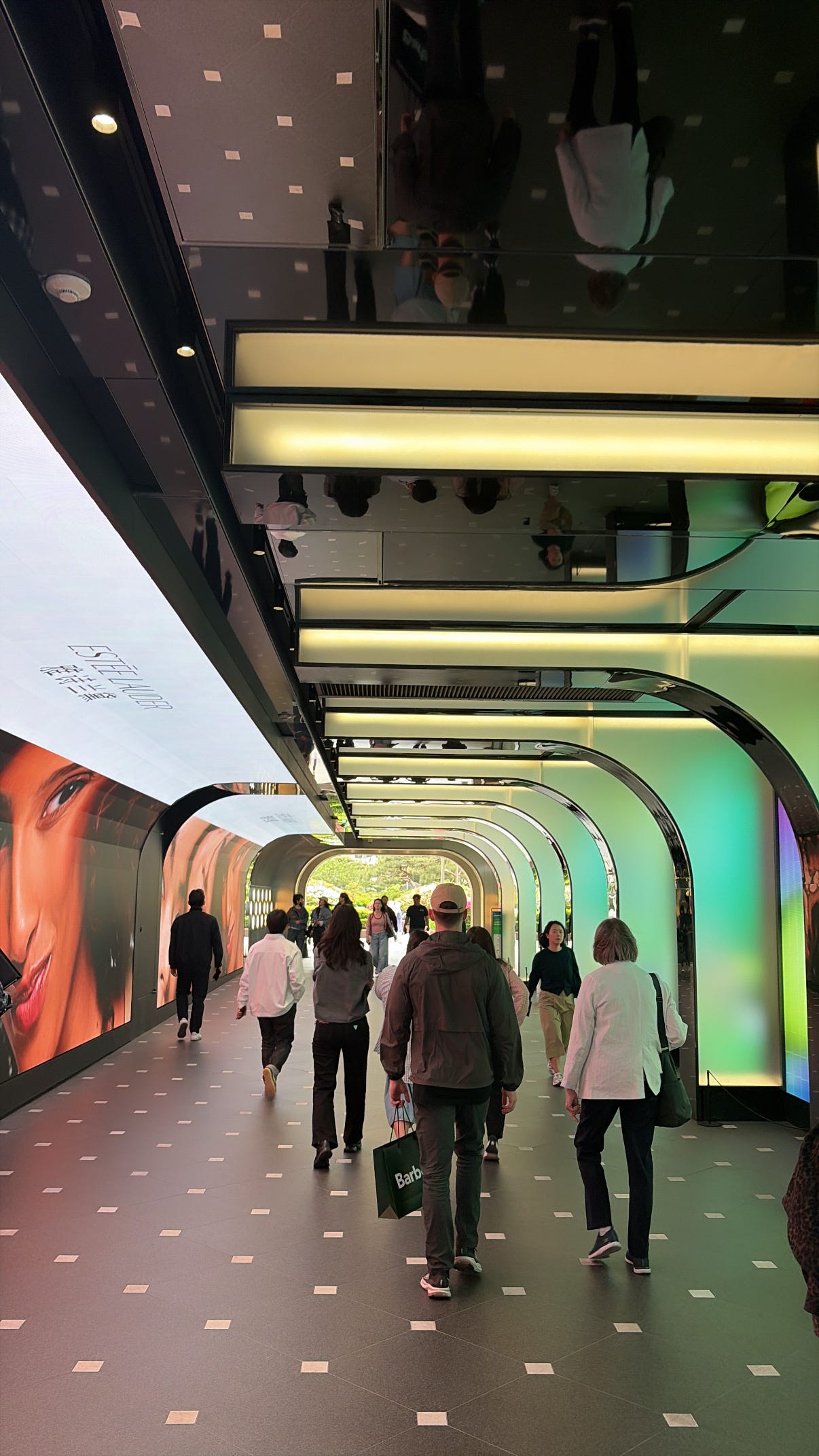
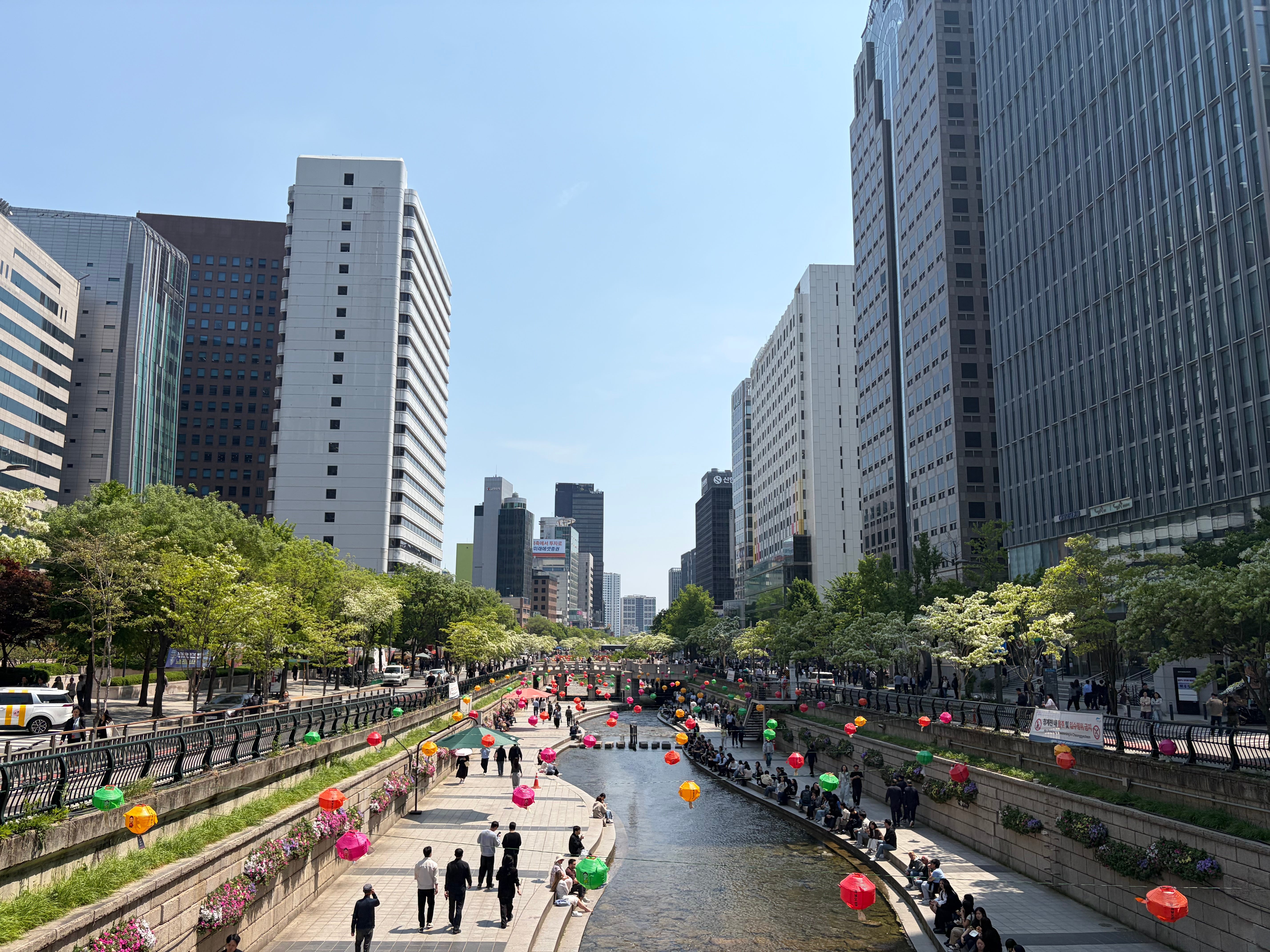
These final photos are the stragglers of the reel, random snapshots from walking the sidewalks of the Seocho District, in between more towering buildings straddling the streets; through a mall complex with a futuristic tunnel; and passing over the Cheonggyecheon, a stream in downtown Seoul which, around noonday, becomes a popular lunch spot for employees working nearby. This stream runs into Cheonggye Plaza with the colorful horn pictured above, and numerous bridges crossing over provide optimal vantage points to observe such a serene scene: pedestrians, bystanders, friends, family, staff, people from all walks of life coming together to enjoy a beautiful day by the stream, however momentary it might be. I remember standing on that bridge and looking out at this view for quite a while, capturing an image of Seoul to take home.