
Looking East
Part Two: Tokyo, Japan

On May the 8th, at midday, my mom, brother, sister, and I flew from Incheon outside Seoul, up and over the Sea of Japan in a straight shot that, in two-and-a-half hours, brought us to Narita International Airport in Japan.
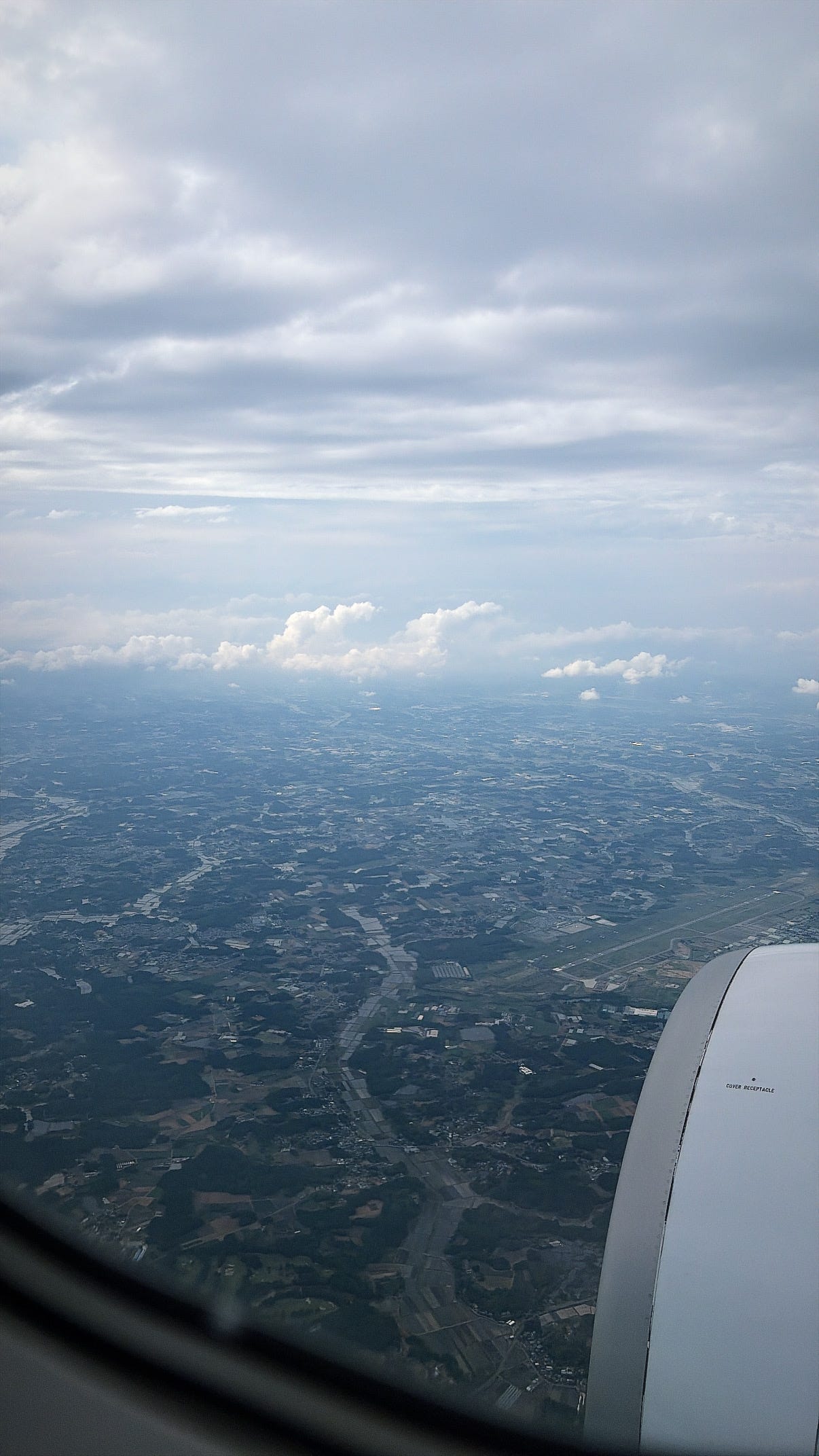
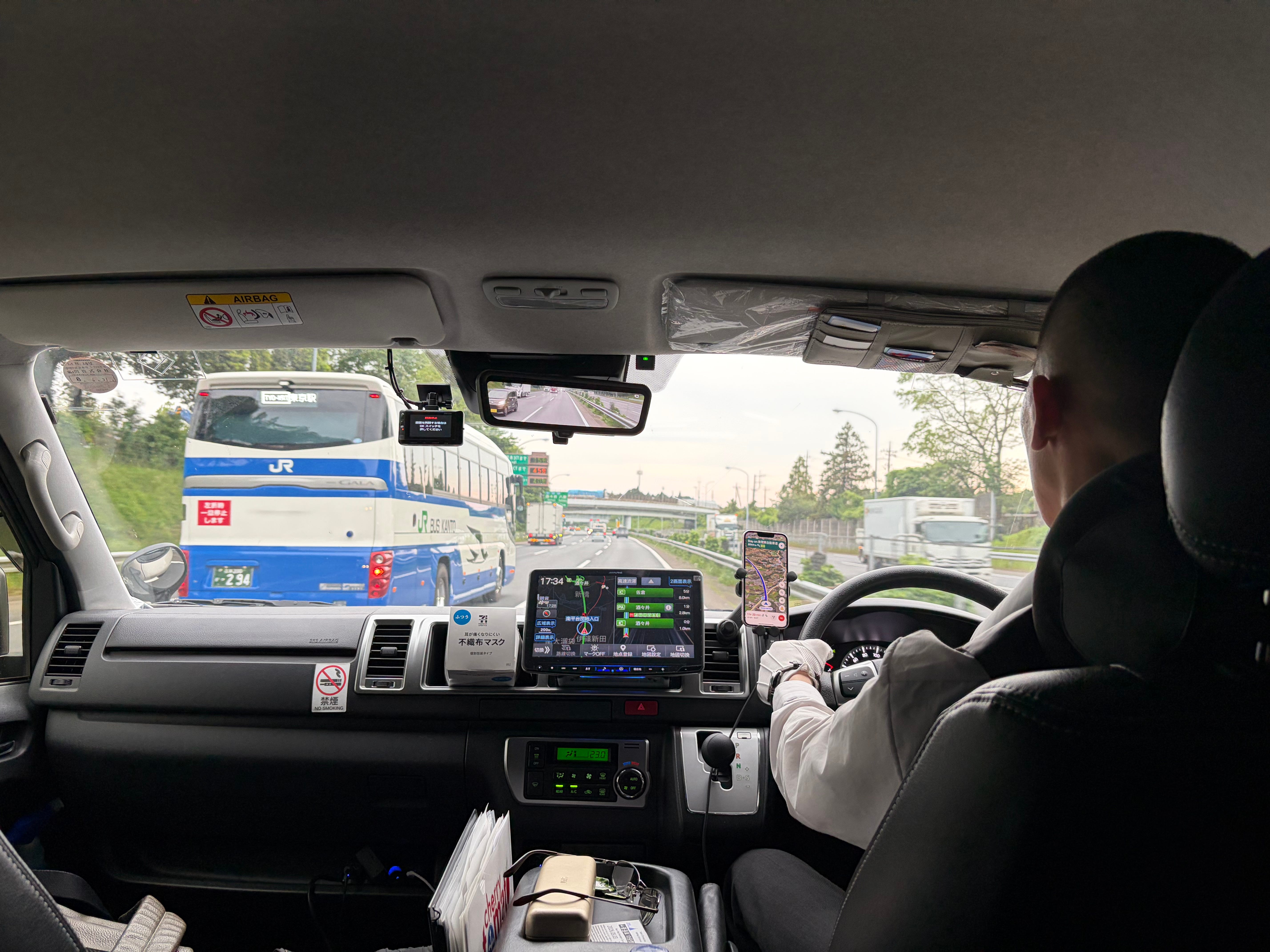
We took a cab ride into Shinjuku, Tokyo, about an hour-long ride, and I remember watching through the taxi windshield the flatlands of Chiba slowly start to sprout building upon building upon building, neighborhoods scattered soon sprawling, amassing as we inched closer to the city, where towering monoliths sprung towards the sky, shading the highways, touching the clouds, signs seizing my attention, and windows, countless windows, millions of twinkling shards of light.
After checking into the hotel, we jumped out into the streets, wandering and wending through alleyways, around corners and down streets lit up by the glowing shop signs, in search of a restaurant to get our first meal in Tokyo.
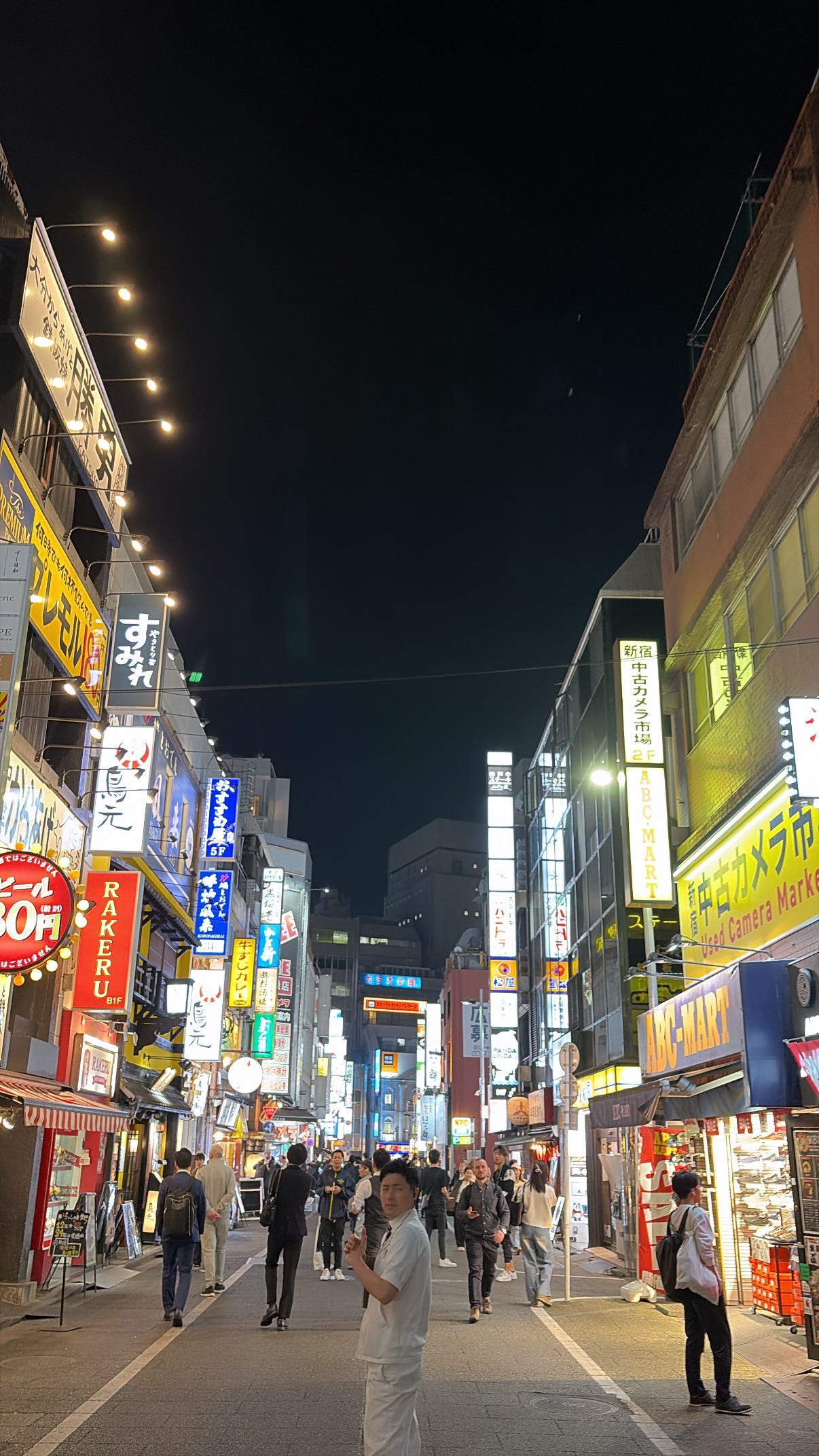
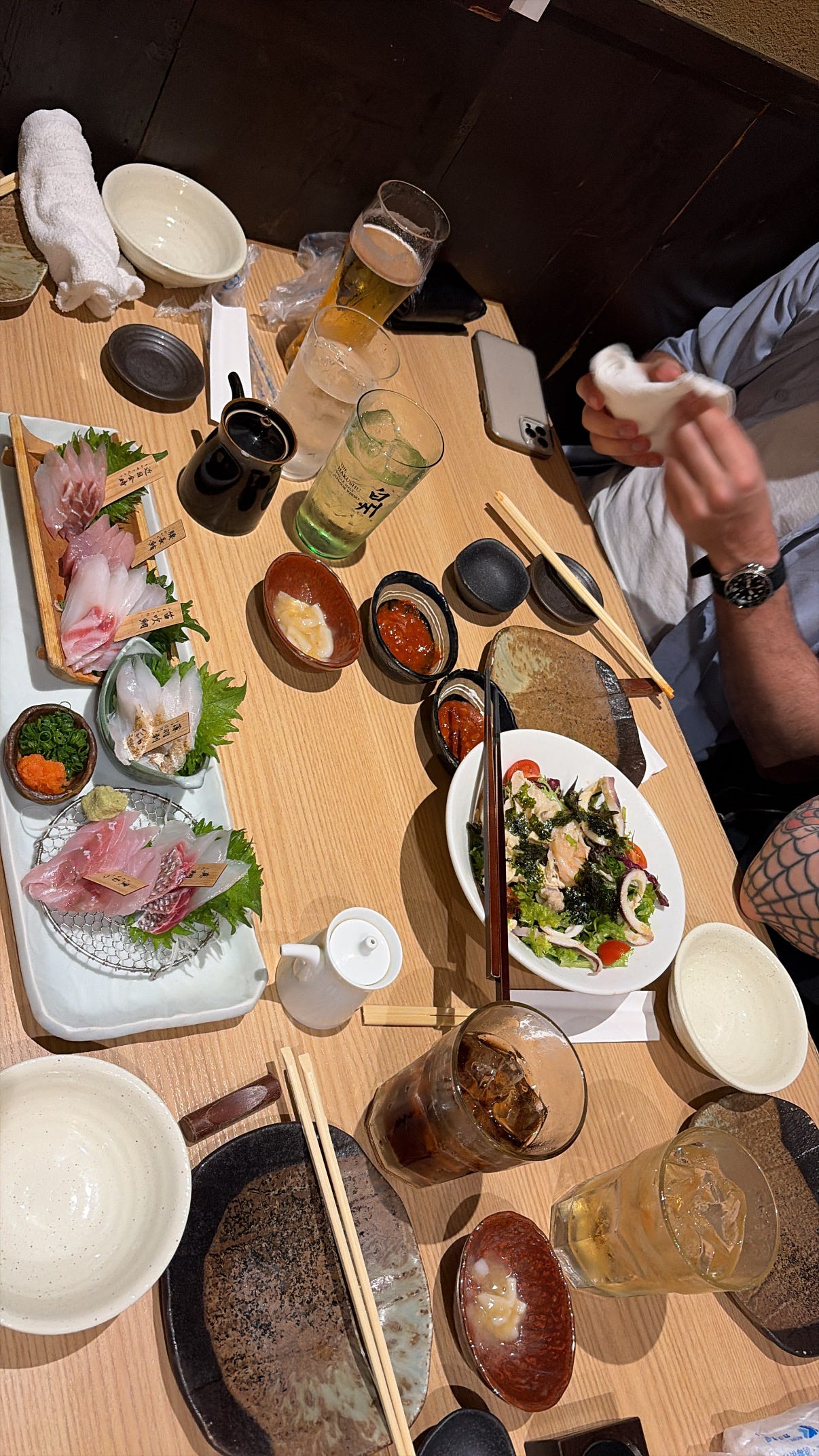
The man standing center is the owner of a restaurant situated leftward, just out of frame, and it was he who coaxed the four of us into his establishment, where we had a delectable, if at times challenging, dinner, pictured below. Of all the food I ate throughout the entire trip, the strangest dish I encountered hides in plain sight in this photo: the tiny red bowls containing a raw octopus medley, doused in a sauce that tasted like it was scooped straight out the sea, so salty, so strong, so mucinous in its texture that no one else could take a second bite. My first taste was jarring, but with the second, I started to grasp its appeal, and slowly but surely ate the whole thing. Definitely a dish I’ll always remember.
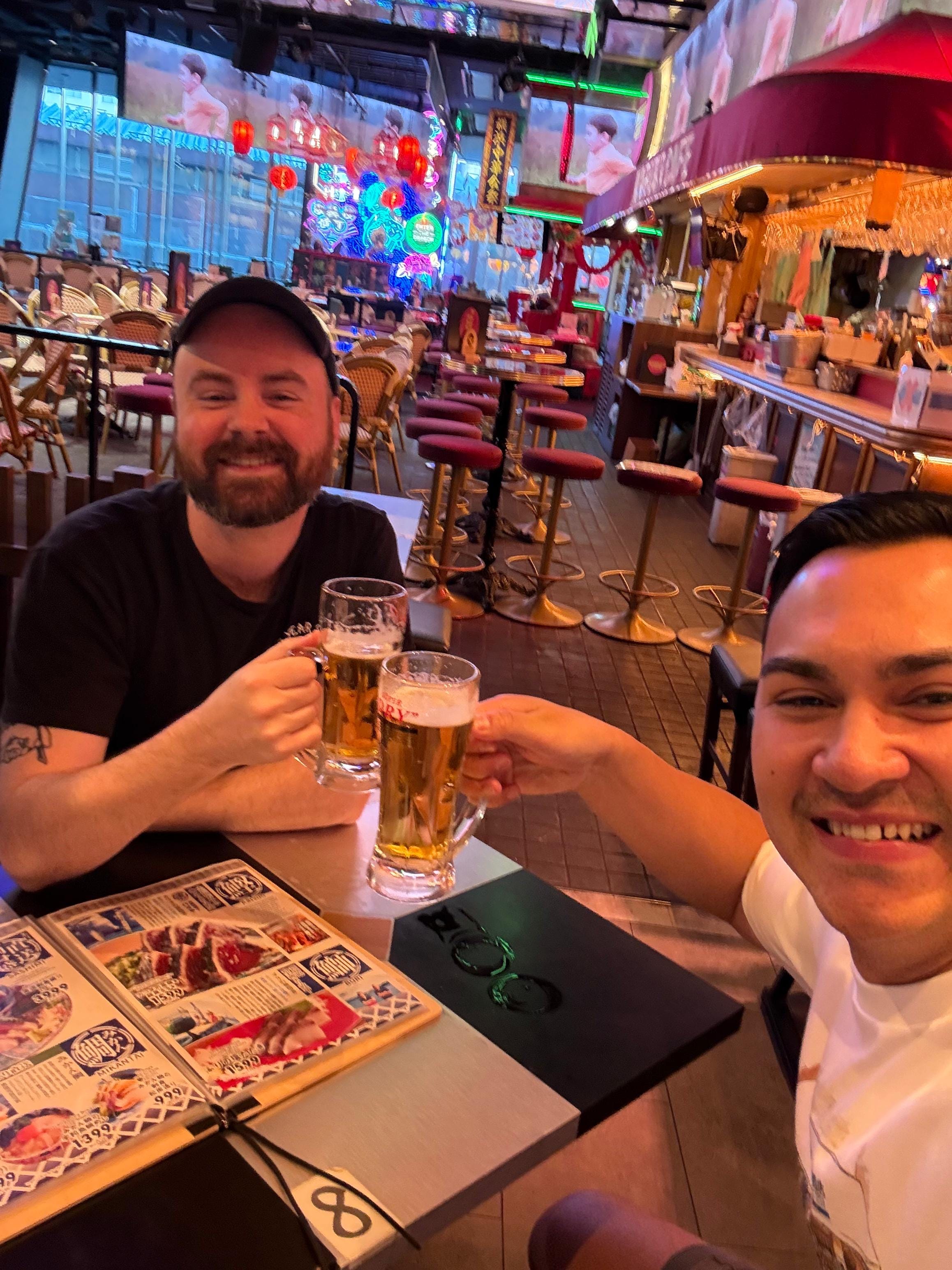
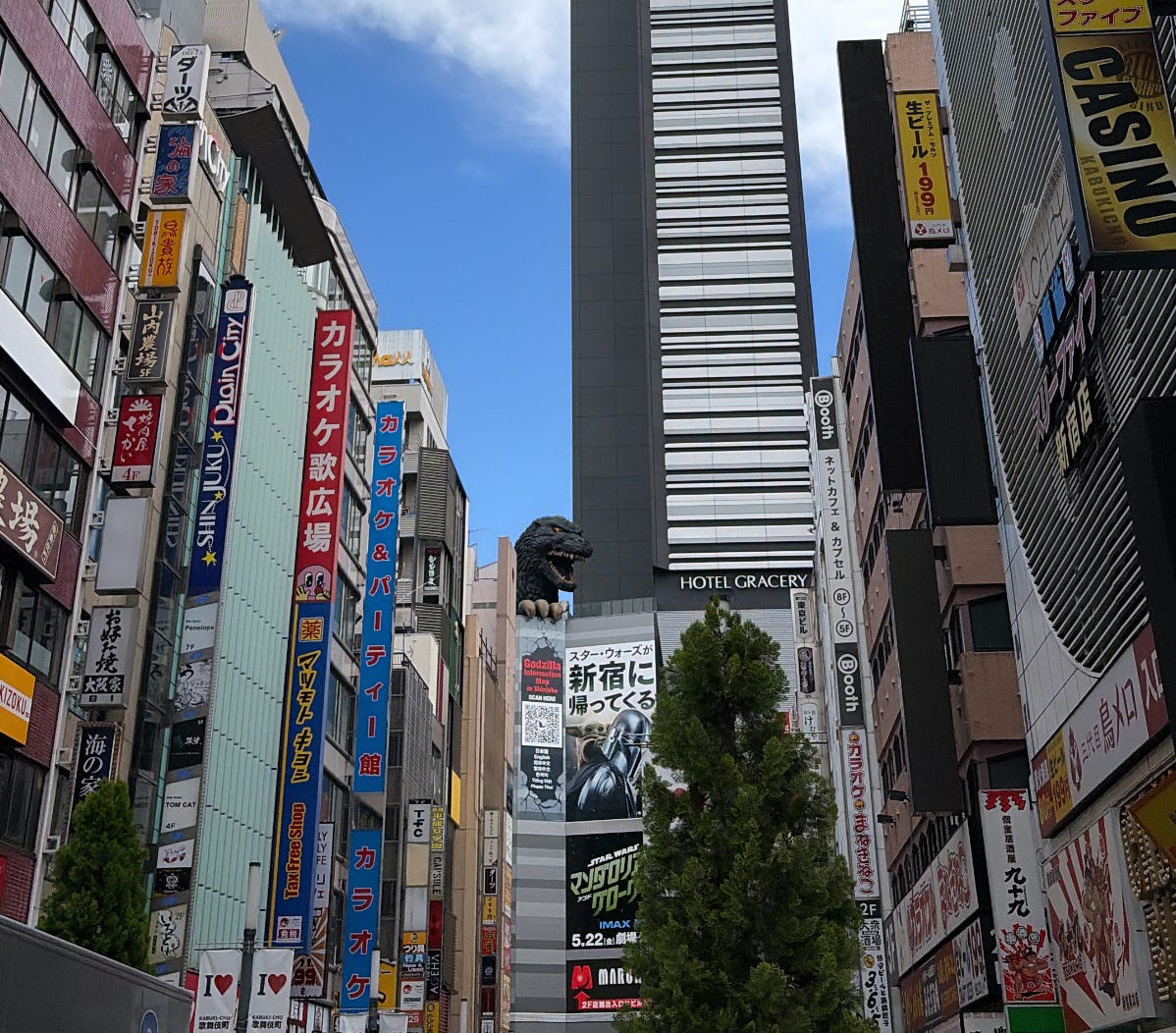
One of the highlights of my trip arrived on my first morning in Tokyo. A high school friend of mine, seeing some of my social media posts about Tokyo, reached out to me, as he and his wife were also in Tokyo, part of a longer trip they were taking across the whole country. While it is my first day in Tokyo, it was his last, and, realizing, by sheer serendipity, that our respective hotels happened to be within a mile of each other, we made plans to meet up and reconnect, grabbing beers at 8 am at a Shinjuku restaurant whose windows overlooked a plaza across from a massive Godzilla statue perched off the opposite facade. What are the odds that, in a city of 37 million people, one runs into a friend from childhood? Shoutout to you, Ryan; cheers to reconnecting on the other side of the world.
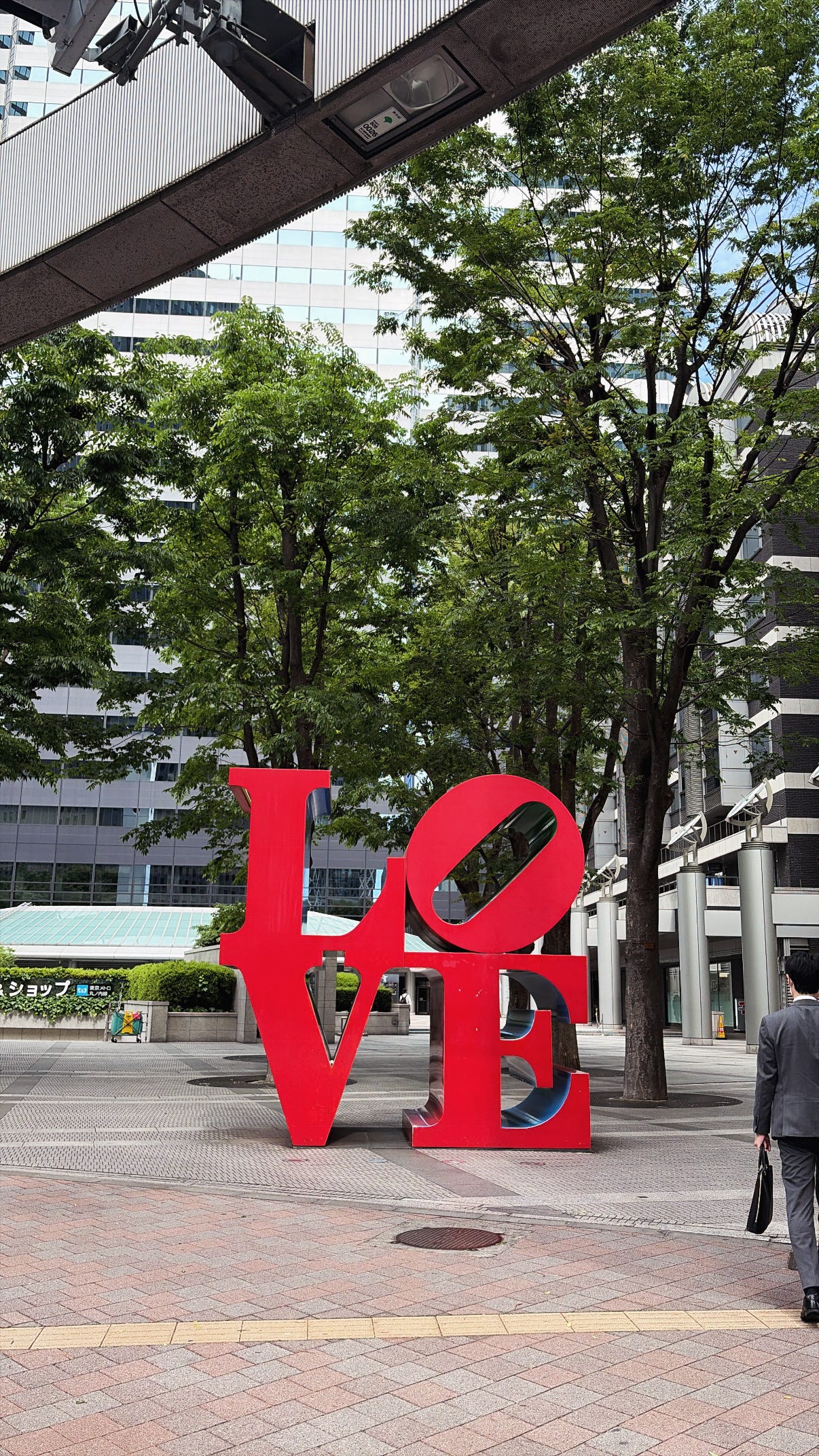
Walking back to my hotel from our breakfast beers, I happened upon the famed Robert Indiana pop art LOVE sculpture standing in Shinjuku, Tokyo. One of its twins stands here in Philadelphia, famously perched at the entrance of Love Park, only a few blocks away from where I live. So, stumbling upon this same sculpture in Tokyo, completely by chance, felt like a small signpost, a little link to my life back in the States, revealing an interconnectedness that spanned the thousands of miles between home and me. I’ve walked past the Philly sign countless times, but only once could I walk past the Tokyo one—and that recognition, something I surely share with countless tourists who visit Philadelphia, brings everything a bit closer.
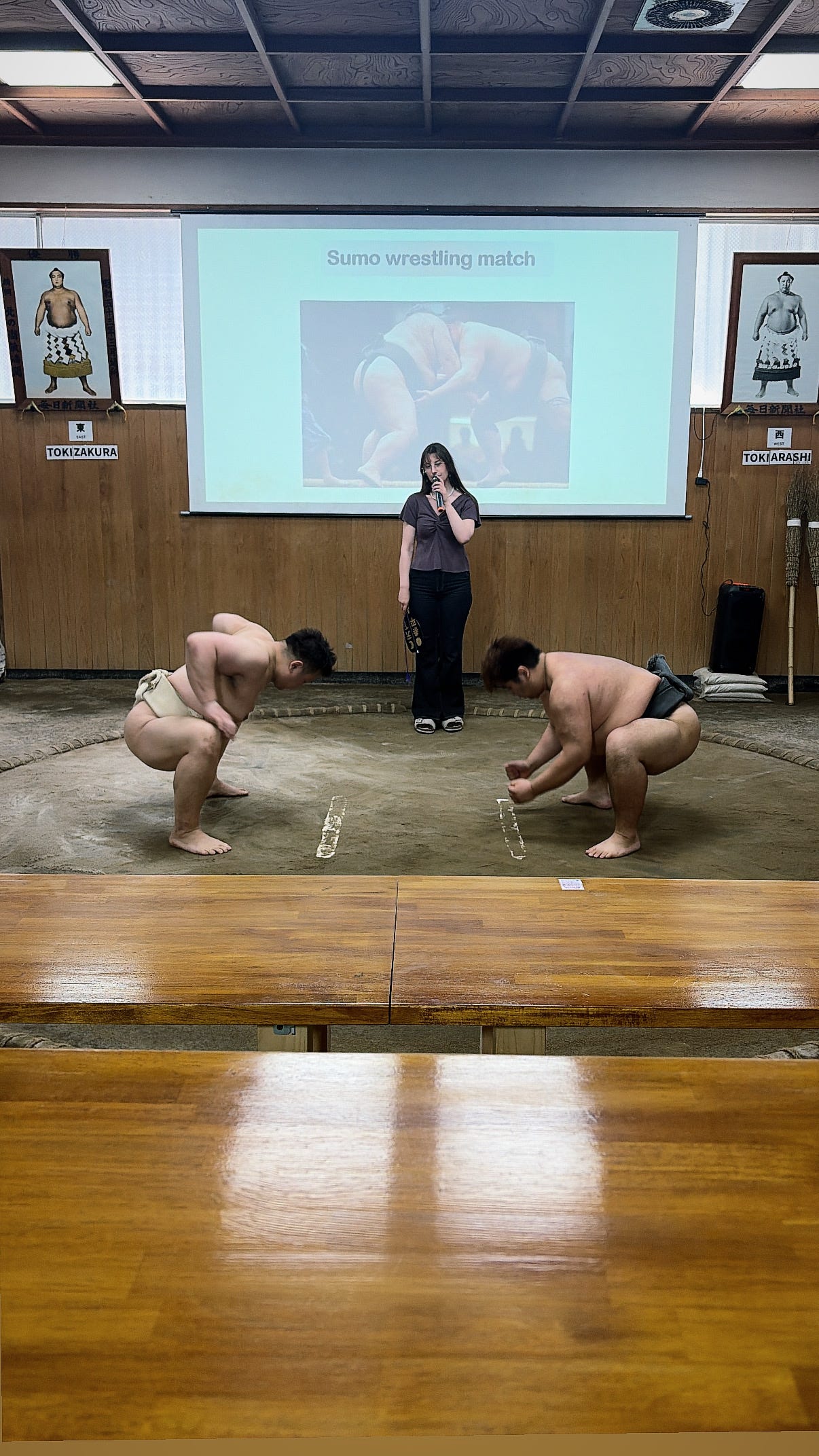
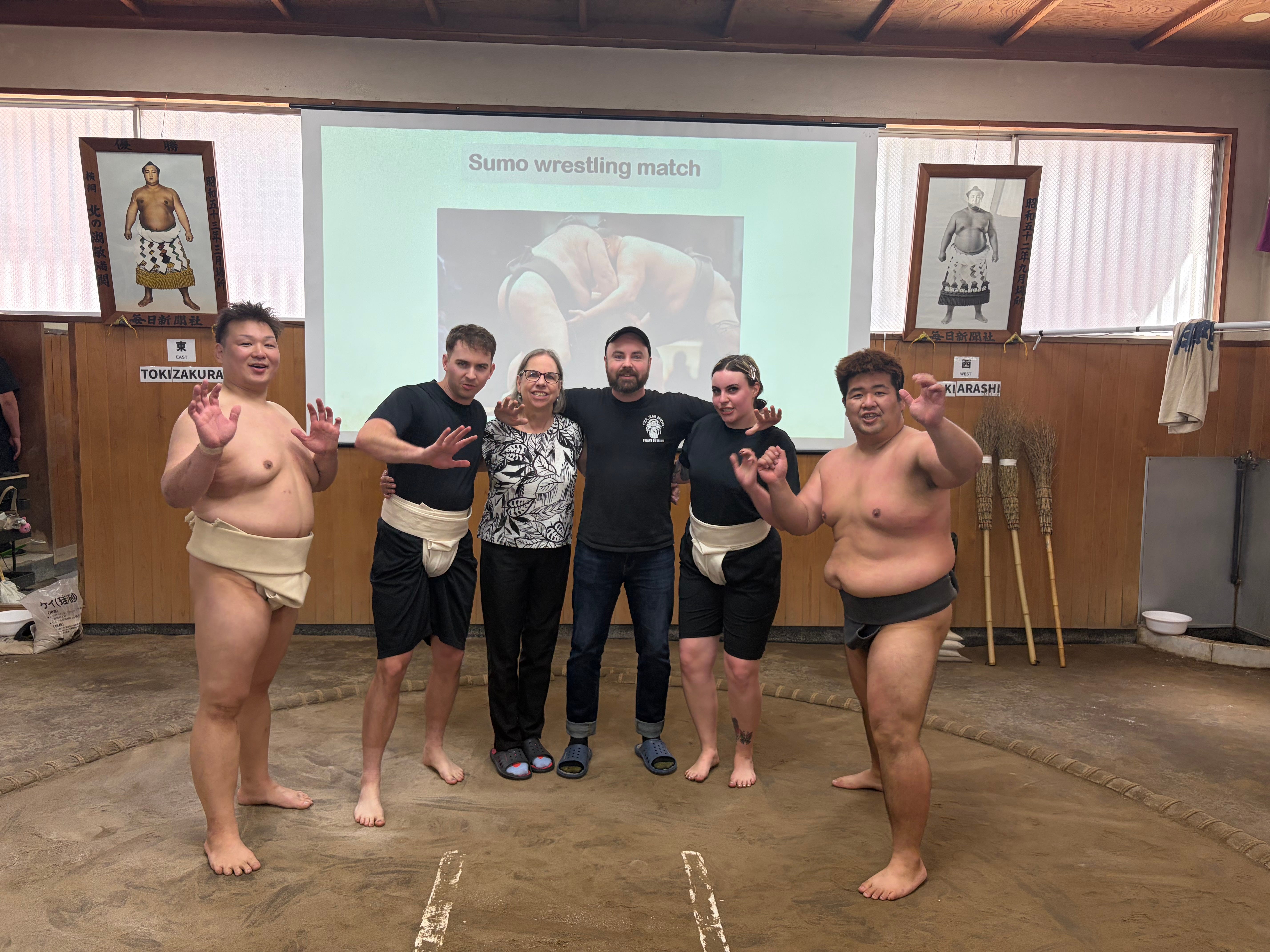
The second highlight of my trip came when we traveled into Koto City to a Sumo training stable, called a “beya,” where we had the opportunity to witness a live Sumo wrestling demonstration. After jumping off the southbound subway and navigating through neighborhood streets, we entered a small training camp. Our English-speaking host/instructor, pictured here with the microphone, gave a presentation about the history, tradition, and rules of Sumo wrestling, which we received over trays of soup, rice, and fried chicken—the classic Sumo wrestler meal. And then we watched the two men pictured above, authentic Sumo wrestlers, go at it in the ring. They duked it out for a few rounds, like human bulls facing off and fighting for glory, before inviting volunteers up to join them. My sister and brother, braver than myself, took on the challenge, which only added to the memory we were making all the while.
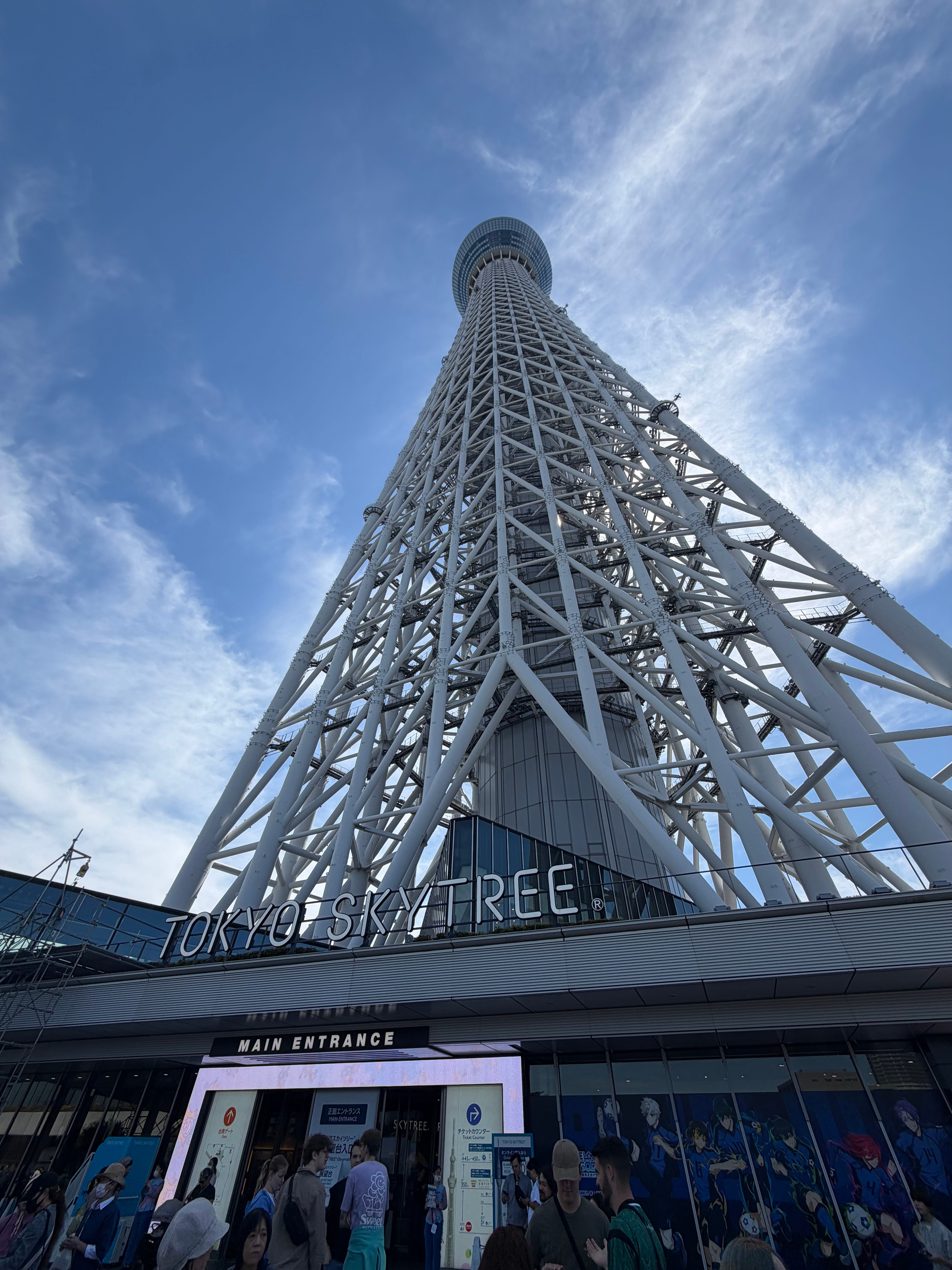
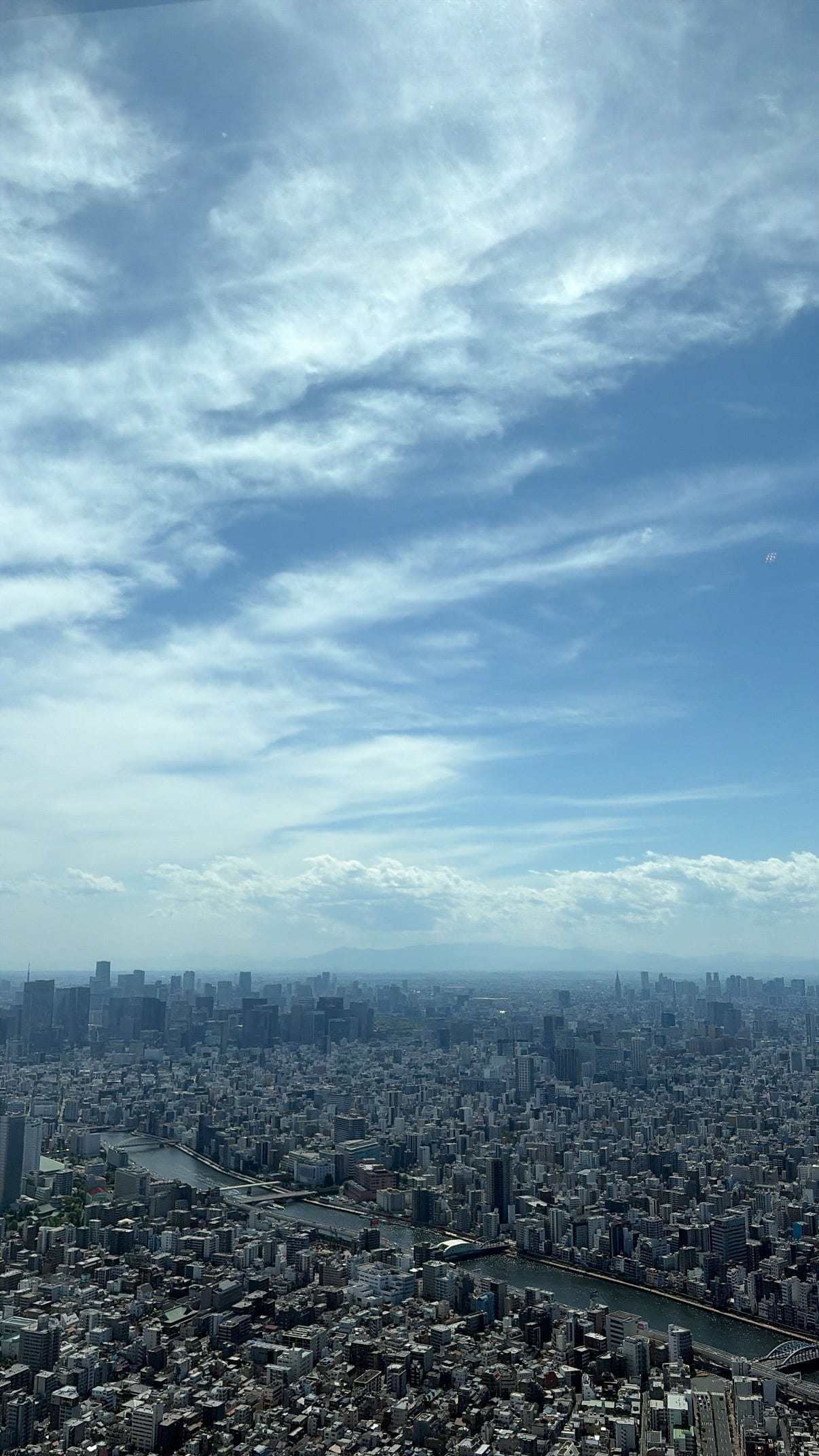
The third highlight happened immediately following the Sumo match, when we traveled north to Sumida and summited Tokyo Skytree. Rising 2,080 feet above eastern Tokyo, it is the tallest structure in Japan and one of the tallest towers in the world. Its sleek, tapering architecture blends traditional Japanese design influences with modern engineering, serving as both a broadcasting tower and a landmark visible across the city. There are two observation decks, where we were treated to sweeping panoramic views of Tokyo’s endlessly sprawling landscape, through which runs the Sumida River and beyond which the outline of the mountains far off in the distance can be seen silently standing on the horizon. It’s difficult to describe experiencing such a vista, reminiscent of the natural terrain seen from the top of mountain, but transformed into a cityscape, offering a true understanding of Tokyo’s massive megalopolitan scale.
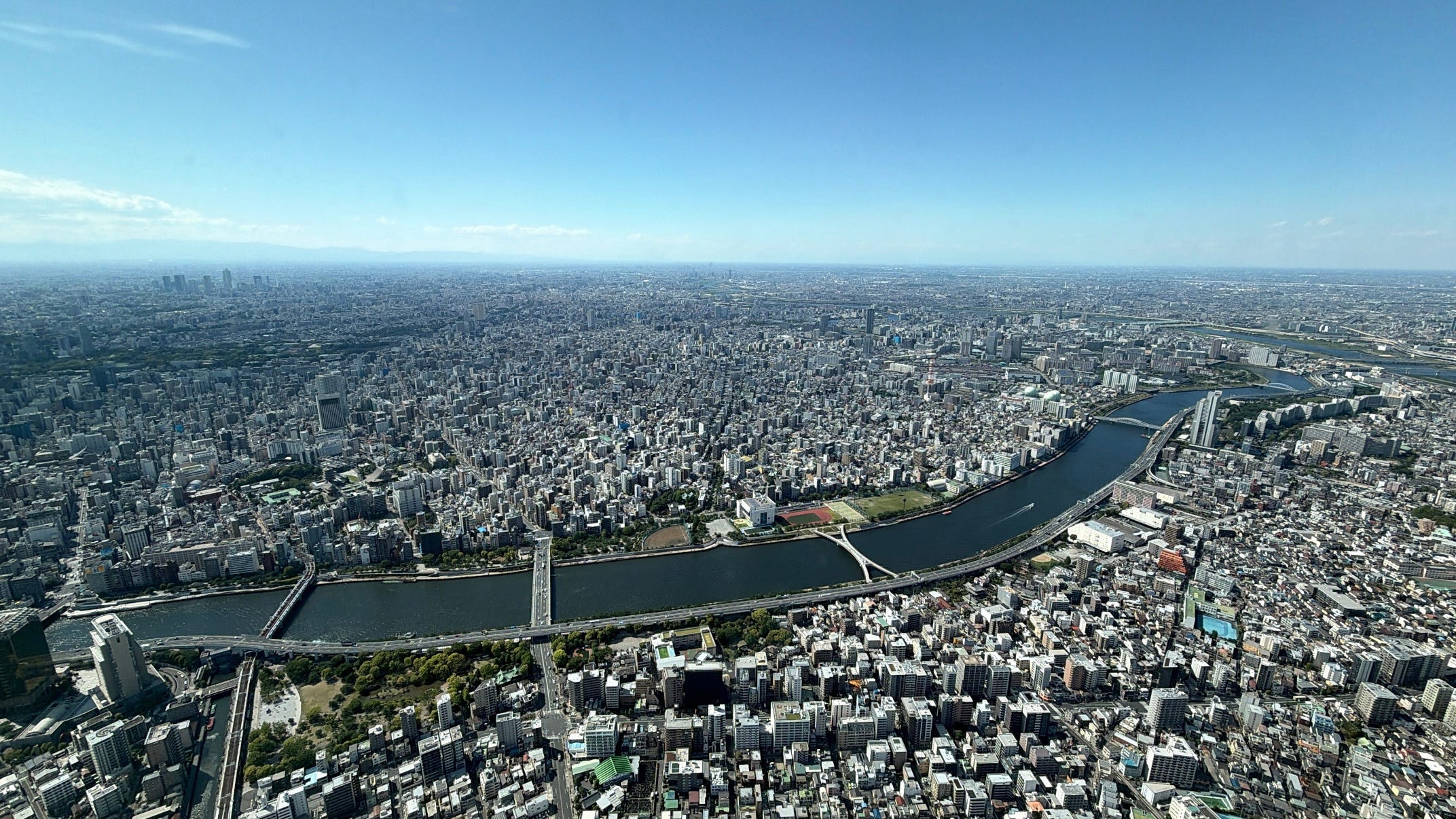
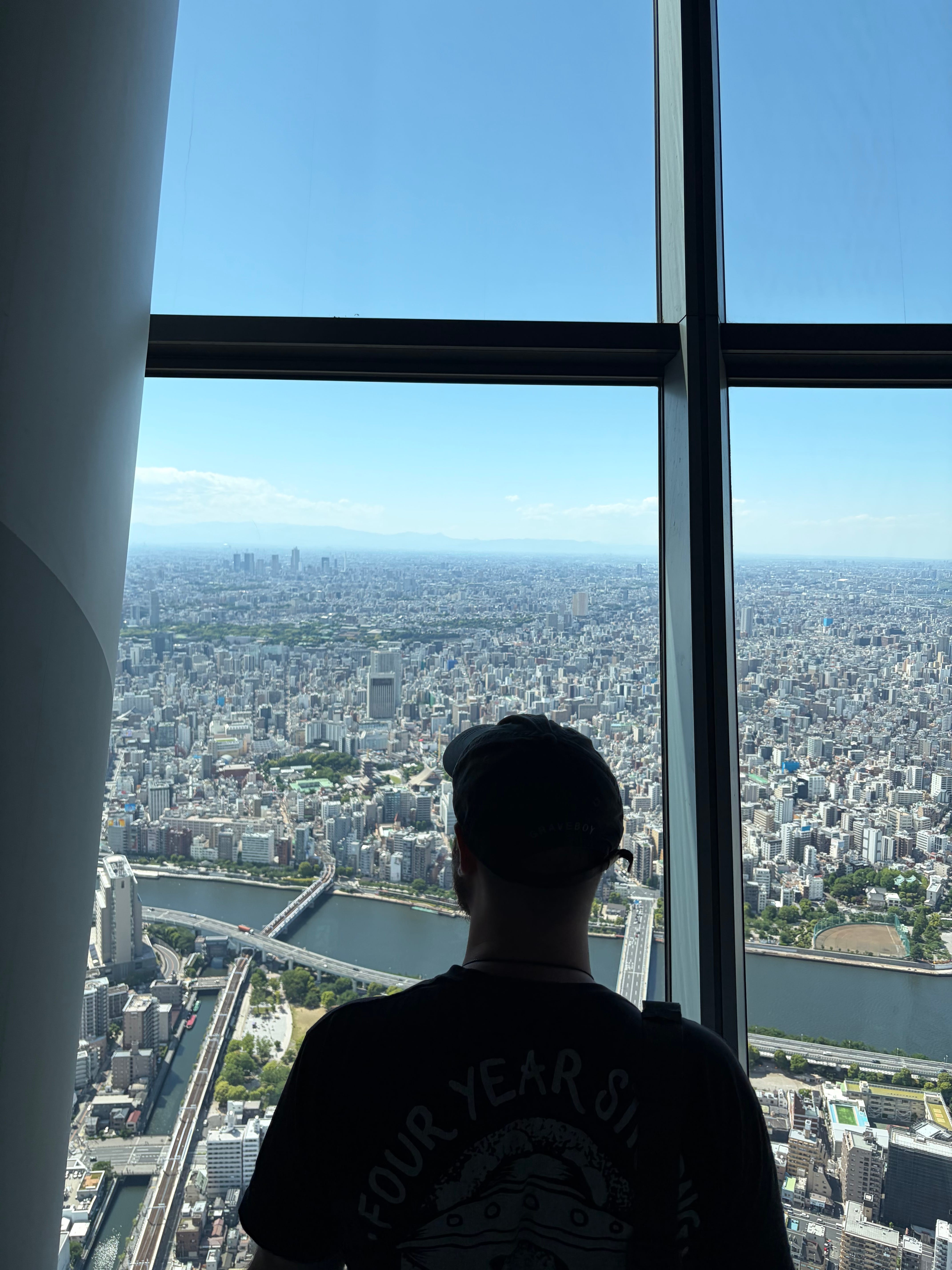
City for as far as the eye can see, spreading and sprawling in every single direction, home to an invisible population of millions of citizens—families, friends, lovers—the complexity whose lives and histories I will never know, an astronomical awareness of all that is unseen within this single scene, a sight from the top of the Skytree.
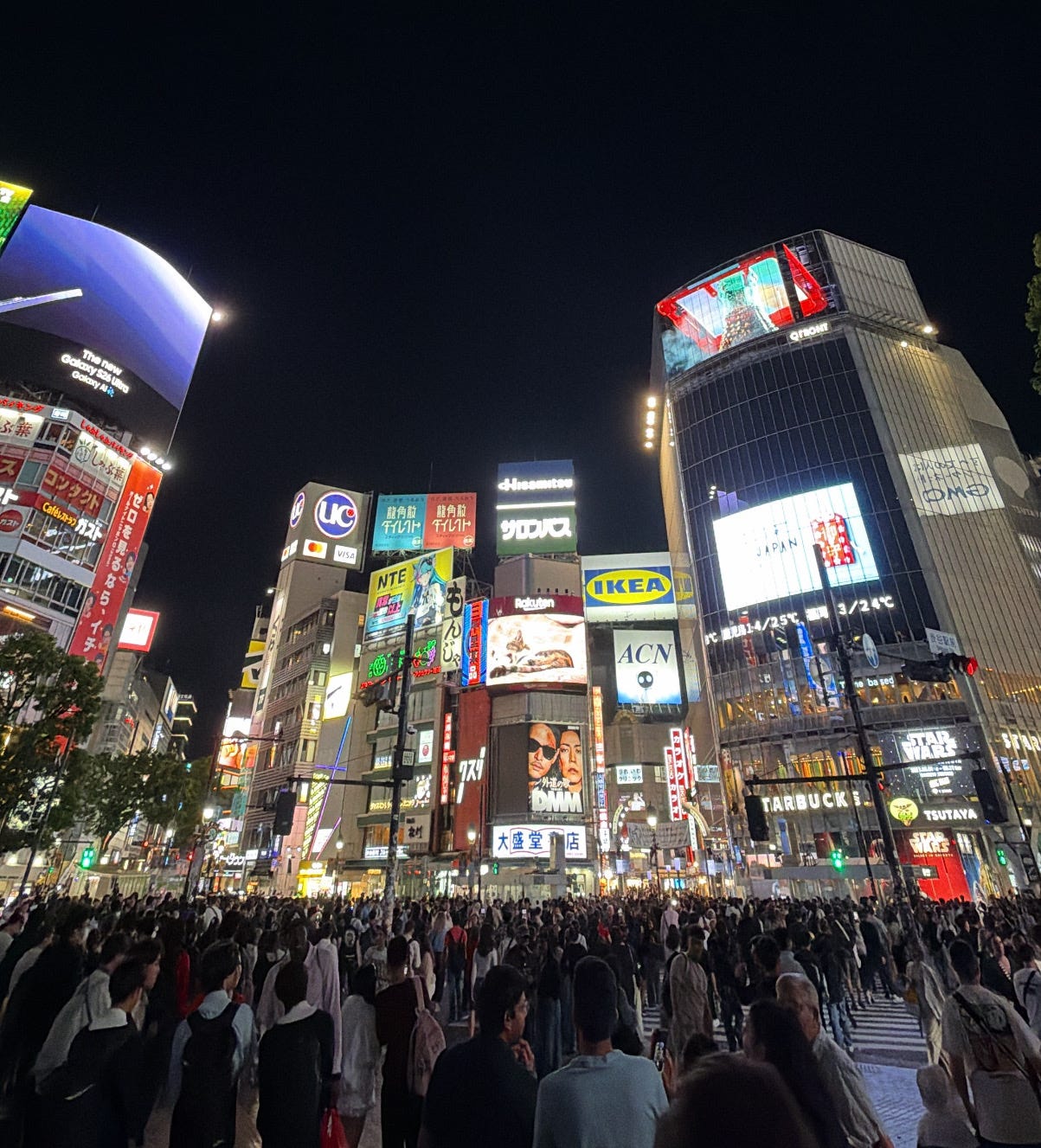
One place we knew we needed to see was the Shibuya Crossing, one of the most iconic intersections in the world. Situated at the heart of Tokyo’s bustling commercial district, traffic halts in every direction as thousands of people surge across the intersection simultaneously, in a mass crossing called a “scramble.” Towering digital billboards, glowing neon signs perched onto buildings surround the constant stream of shoppers, commuters, and tourists, emitting an energy that amplifies the controlled chaos of the crossing. Racing across the crosswalk with my sister was the closest feeling to flying with a flock of birds, in total synchrony with the movement of the masses surrounding us, like an improvised yet choreographed dance on a massive urban stage. It was surely one of the moments that made me realize just how many people populate the city of Tokyo.


My brother, having been to Tokyo before, was eager to show us one of the coolest urban quirks of the city. “Yokochõ,” meaning side streets or alleyways, are these narrow, lantern-lit passageways carved in between city blocks, winding lanes barely wide enough for two people to pass, lined with weathered wooden facades, hand-painted signs, hanging paper lanterns, the home to hundreds of tiny restaurants, izakayas, ramen shops, and cocktail bars, most of which seat only two or three patrons at a time. At eventide, the warm glow spilling from open doorways, mixed with the redolence of simmering broth and lively laughs and hums of conversation, entices and invites passersby, transforming simple cut-throughs into vibrant enclaves teeming with food, history, and nightlife with an intimacy unique to Tokyo alone.
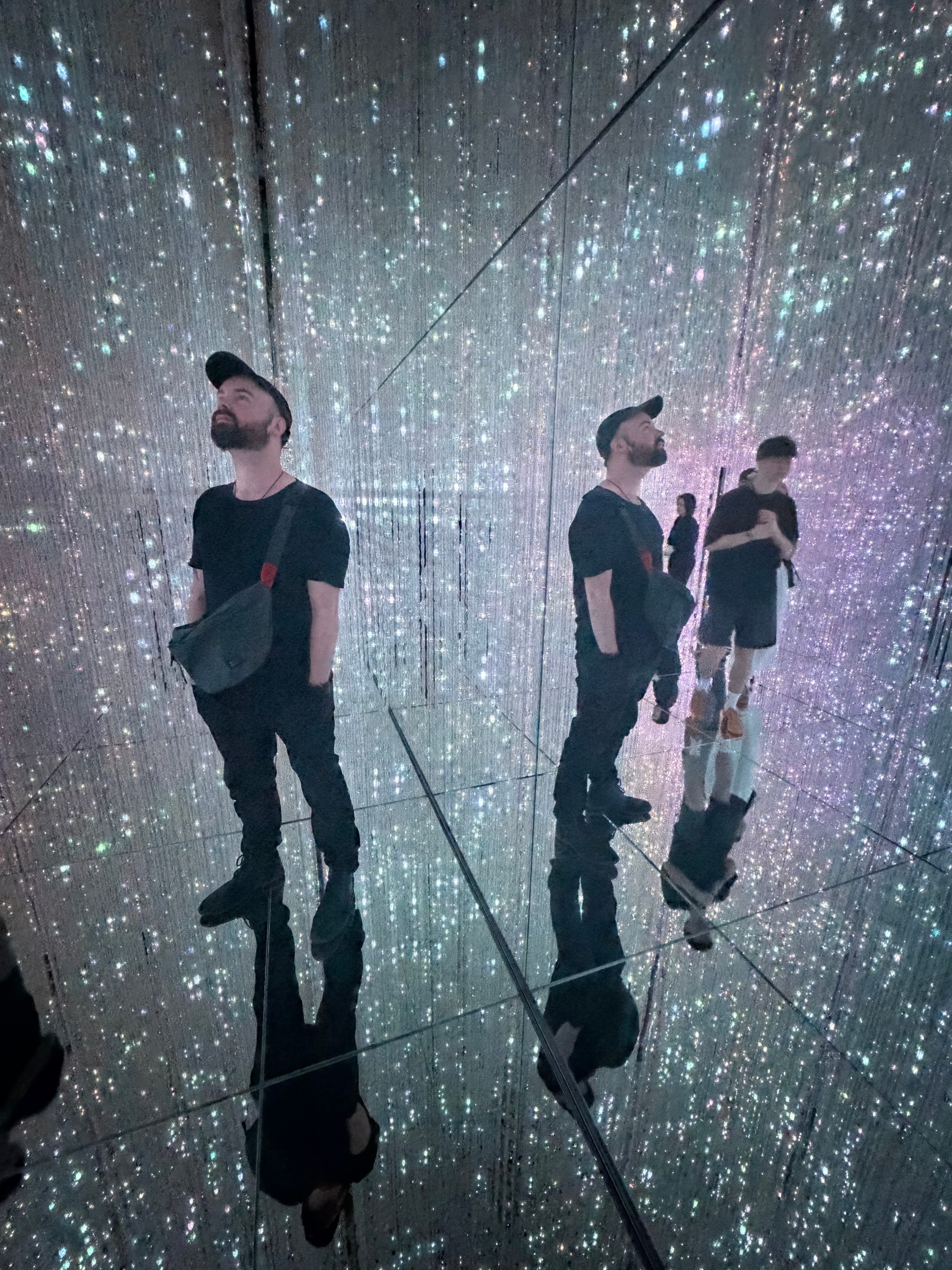
The fourth and final highlight of the trip was an excursion to teamLab Borderless, a digital art museum buried beneath the MORI Building near Minato City. To this day, I struggle to find the words to describe this experience—one which feels so much like stepping into a dream. Walking through, every conventional notion of a museum dissolves under a kaleidoscopic immersion of light, sound, color, and motion. Rather than stick to a prescribed path, we wandered the darkened labyrinth without a map, witnessing artworks flow seamlessly across walls, floors, ceilings, and cavernous rooms, constantly shifting and responding to our presence. Flowers bloomed beneath our feet, waterfalls curved around our footsteps, lanterns pulsed like living organisms, and, most memorably, tentacles of LEDs stretching vertically in mirrored chambers gleamed, glimmered, and shimmered, creating an illusion of drifting through a sci-fi-inspired infinite expanse of light. This photo above captures the sheer awe I felt standing in this room, transported from reality into a realm beyond imagination, at once tranquil and disorienting, and breathtakingly beautiful. Never before had I experience a place where technology, design, and engineering so completely deconstructed the boundaries of artistic possibility. A highlight of my trip, a highlight of my life.


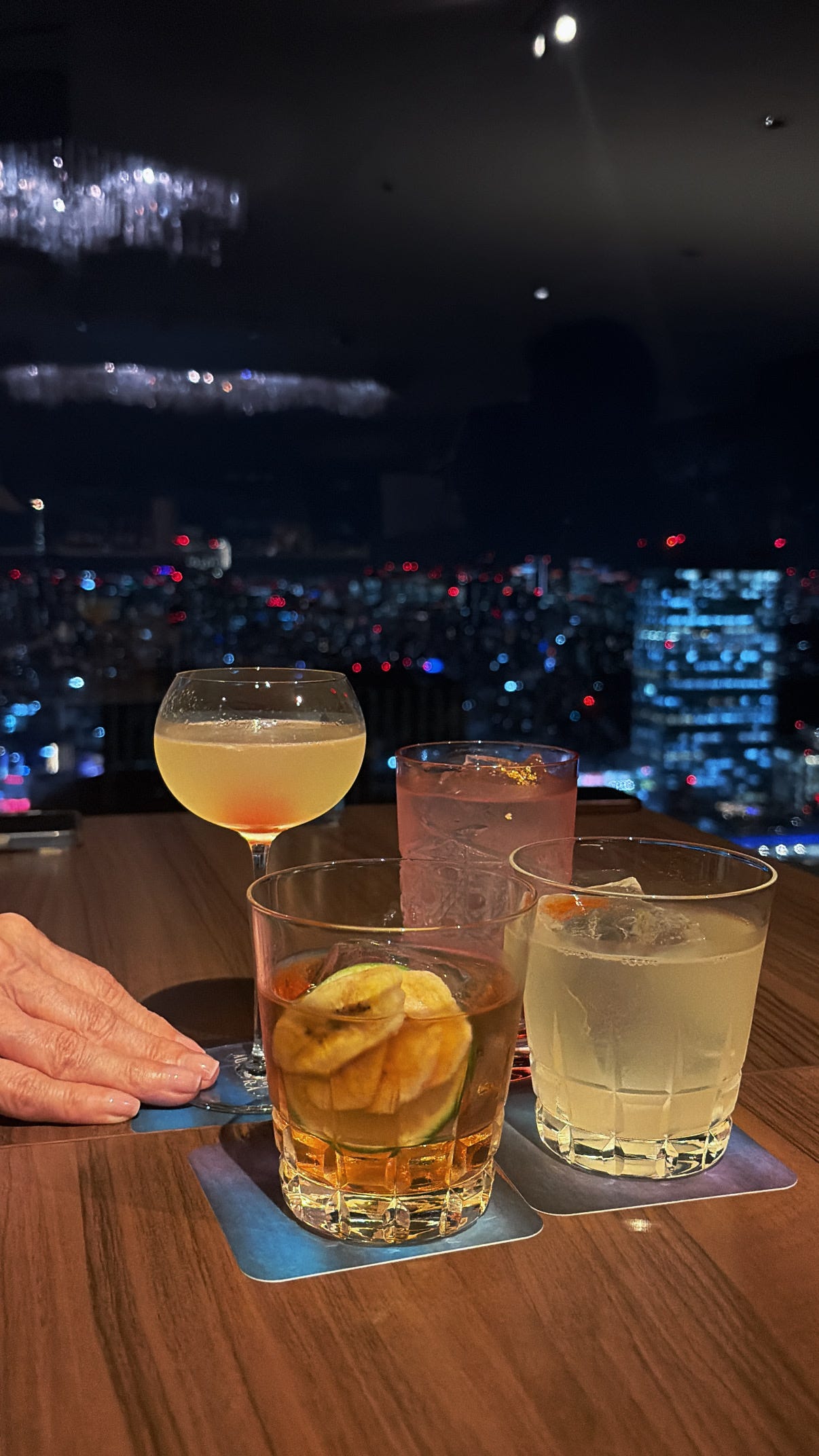
Cocktails at the top of the hotel on our final night in Tokyo, cast against a backdrop of the city at night whose lights and shadows, buildings layered in silhouette rolling into the offing like a frame out of Blade Runner. It was the punctuation mark on a trip that had seemed almost unreal from the moment it began—a final, quiet pause before returning to our lives back in the States. Looking out over the endless city, even now while writing this, spurs introspection, imparting a feeling that no photograph can capture and no memory can truly preserve exactly as it was. Some places leave an impression; others leave a part of themselves within you. Tokyo, and Seoul as well, gave me something that eludes words, an experience that evades description, feelings that escape articulation. And I firmly believe that’s what traveling to the other side of the world should do.