The Eighty-third
Friday, February 27th, 2026

“Through the square of skin that had been left clear on his stomach, through the layers of flesh and organs whose names their owner himself did not know, through the mass of the toadlike tumor, through the stomach and entrails, through the blood that flowed along his arteries and veins, through lymph and cells, through the spine and lesser bones and again through more layers of flesh, vessels and skin on his back, then through the hard wooden board of the couch, through the four-centimeter-thick floorboards, through the props, through the filling beneath the boards, down, down, until they disappeared into the very stone foundations of the building or into the earth, poured the harsh X rays, the trembling vectors of electric and magnetic fields, unimaginable to the human mind, or else the more comprehensible quanta that like shells out of guns pounded and riddled everything in their path.” - Aleksandr Solzhenitsyn, Cancer Ward (p. 68)
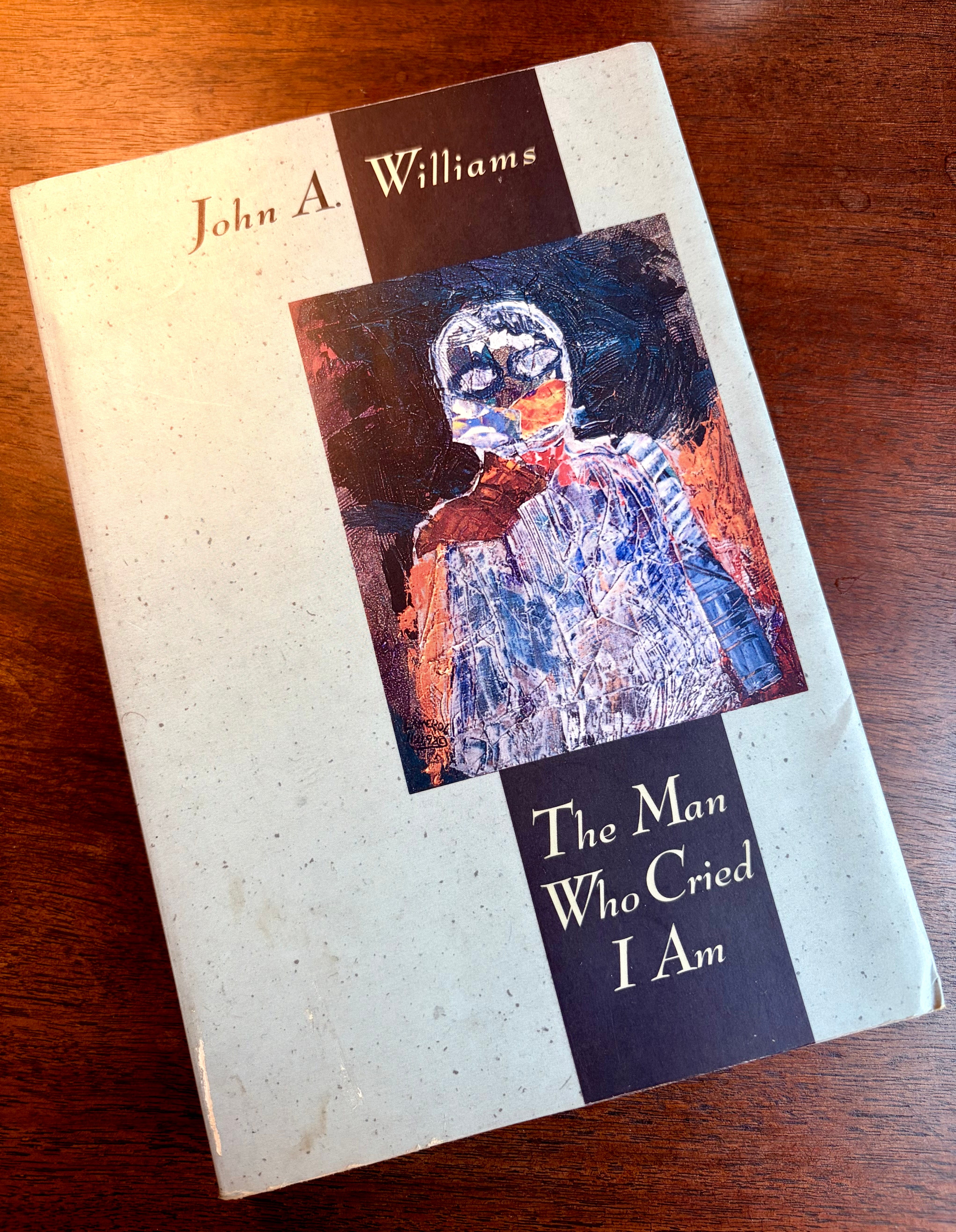
Book in the Pipeline: The Man Who Cried I Am by John A. Williams
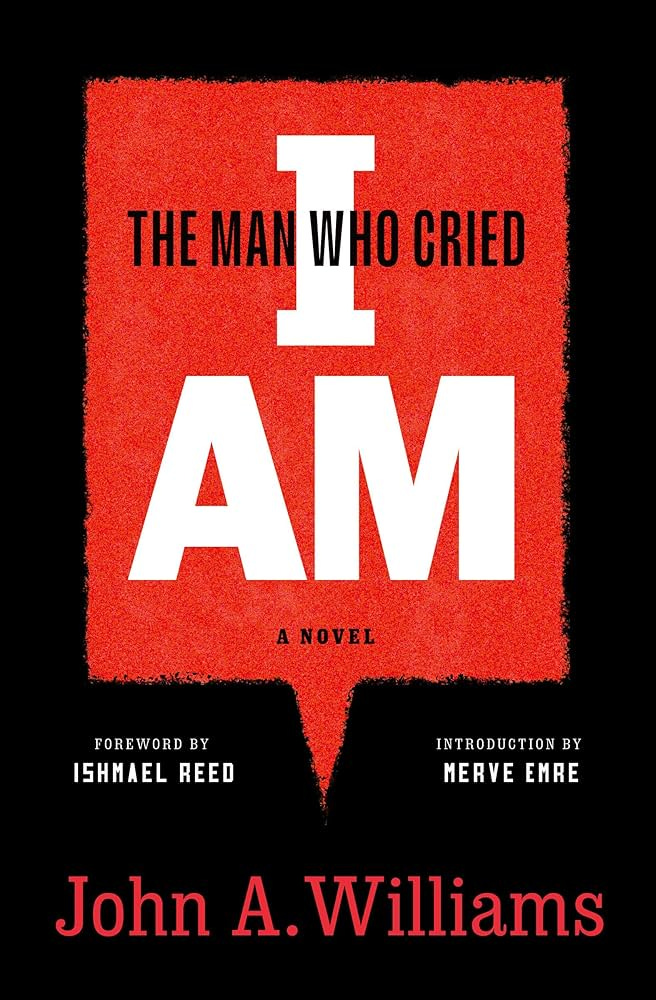
Some novels take the world by storm, shot into the literary zeitgeist immediately on arrival, their reputation in the canonical annals cemented from the outset. For other novels, recognition is a slow burn, a quiet ascent into the upper “modern classic” echelon, gradually amassing acclaim over years, decades, even centuries. Yet still, there’s a third category: those novels whose renown remains recognized by only a few, works which soar under the radar, unsung throughout the years yet nonetheless profound to those who know them. To me, The Man Who Cried I Am by John A. Williams, first published in 1967, seems to sit firmly in that third camp. A work of African American literature that stands alongside Ralph Ellison’s Invisible Man and Richard Wright’s Native Son, the novel follows Max Reddick, a Black American writer living in exile in Europe, who reflects on his life as he lies on his deathbed. Through a series of flashbacks, Max traces his past friendships with civil rights leaders, artists, and political figures, while exposing the racial violence, government surveillance, and systemic betrayal that confronted and compelled mid-century Black activism. As Max uncovers a secret U.S. government contingency plan designed “to terminate, once and for all, the Minority threat to the whole of American society,” the novel builds toward a searing indictment of American democracy, blending political thriller with elegy to challenge the cost of speaking truth in a nation structured by racism. Spanning nearly 500 pages, the novel was reissued in 2023 by the Library of Congress with a new foreword by Ishmael Reed and introduction from, my personal favorite, Merve Emre. But I already have a copy, a beautifully battered rare Griot paperback edition published in 1994 for Quality Paperback Book Club by arrangement with the author, replete with French flaps and deckled edges, and devoid of an ISBN. I found it at a thrift store years ago, and since that day, it’s rested on my bookshelf waiting to be opened. But with praise from Chester Himes, John Fowles, and Walter Mosley and with a copy like this, I’m determined to open it soon.
Book Still on the Mind: Housekeeping by Marilynne Robinson
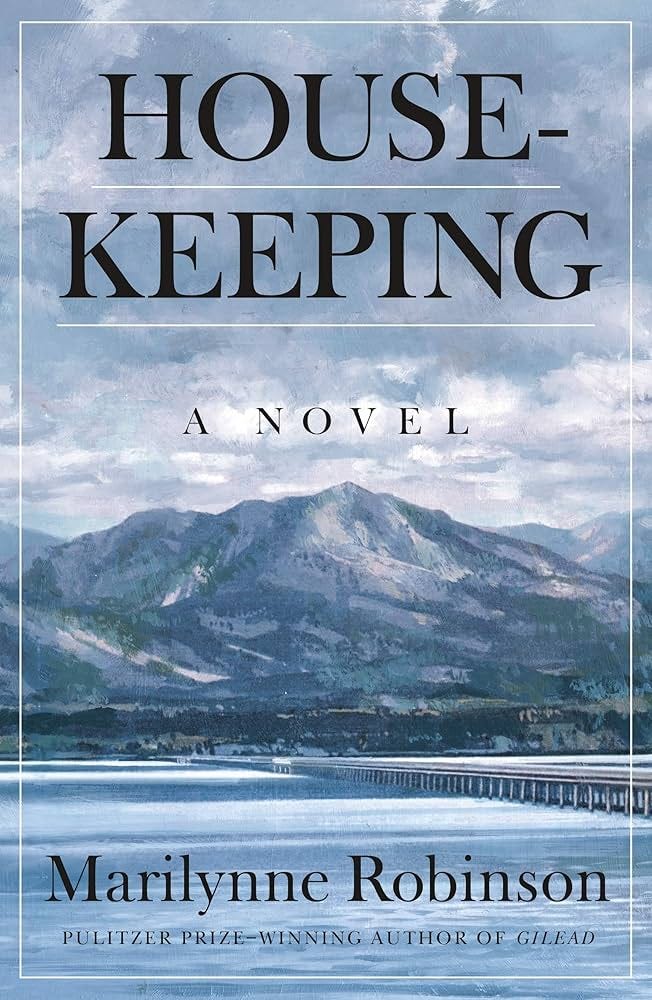
It was February five years ago that I first found the fiction of Marilynne Robinson, a renowned American novelist whose accolades include a Pulitzer Prize, a National Humanities Medal, and Library of Congress Prize for American Fiction. Housekeeping, published in 1980, was my introduction, an assigned read for an undergrad English class and a novel that, today, I still remember so vividly. It’s a quiet, haunting novel set in the remote town of Fingerbone, Idaho, where two orphaned sisters, Ruth and Lucille, are raised by a succession of female relatives after their mother’s suicide. When their eccentric Aunt Sylvie arrives, drifting and transient in spirit, she unsettles the town’s rigid notions of domestic order and gradually draws Ruth into a life untethered from the grips of convention. Narrated through Ruth’s reflective, lyrical voice, the novel becomes an excavation of impermanence, grief, and the porous boundaries between home and wilderness, a notion suggesting that “housekeeping” is not merely about maintaining a household but about how one tends to memory and loss and the fragile structures that hold a life together, both human and other. I remember falling into this one novel, poring through prose so wondrously sewn, words woven into a tapestry wrought with emotional complexity, ethical dilemmas, and scenes of edge-of-your-seat exhilaration. Today, I’m ashamed to say that this one novel is still the only of Robinson’s that I’ve read; but writing this brief musing is renewing my motivation to read more of her work.
Art(ist) of the Week: “Millstone in the Park of the Chateau Noir” by Paul Cézanne (1900)
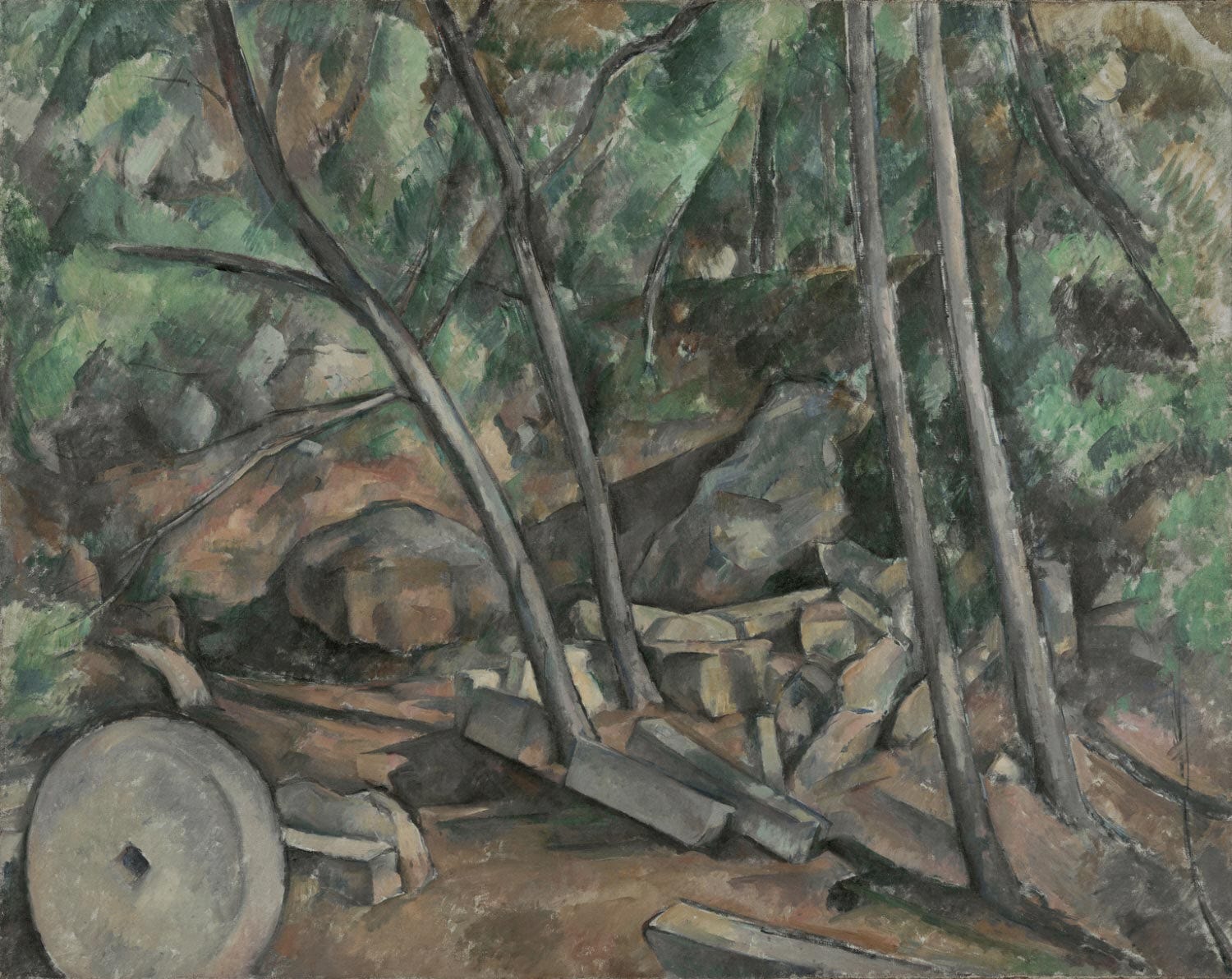
A recent visit to the Philadelphia Museum of Art reunited me with “Millstone in the Park of the Chateau Noir” by French Post-Impressionist painter Paul Cézanne, unveiled in 1900, a work that invites, invokes, inspires a sense solitude singular to a scene of nature. I wrote an ekphrasis for it a while ago, which I’ll relate here: “Stones adorn a forest floor, scattered about the bank at seeming random between the slim trees which curl upward from the ground. Their tops remain out of frame, though a lush mélange of greens and clay sweep the background, conveying the density of the forest. It is remote. Solitude pervades the scene, invoking in the viewer a pleasant natural quietude, doubtless stippled with the sounds of birds chirping, rodents scurrying, a deer sauntering through the pass. It is open. It is a juncture, a scenic spot where hikers, as well as animals, would stop to rest, have a drink, sit and wonder, bask in that unique brilliance offered only by nature, for a moment, before picking up and carrying on. The stones provide an edge to the natural curvature of the trees and foliage, as if carved by man or time.” Seeing it again recalled the experience of my first encounter, which, coupled with the eager anticipation of an imminent and much-needed spring, enkindled in me a new appreciation. Paul Cézanne is truly a master of the form, a virtuoso whose signature style continues to awe and provoke.
Music(ian) of the Week: “California King Bed” by Rihanna
My birthday fell on Tuesday of last week, and to ring in the midnight celebration, some of my closest friends took me out to McCrossen’s, where we chatted, laughed, and sang together over a few drinks. A tune they requested was this one, “California King Bed” by one of the largest pop icons of our time, the Barbadian singer-songwriter Rihanna. Embarrassingly I admit, it was a new one for me, but when I got home and still had its chorus stuck in my head, I texted my friends to make sure I got the title right. The fifth single off Rihanna’s fifth studio album Loud, released in November 2010, “California King Bed” is a dramatic ballad that doubles as a sort of anti-love song, using the image of a vast California king-sized bed to symbolize the emotional chasm between two people who, though appearing physically close, feel “ten thousand miles apart.” Lying “chest to chest, nose to nose,” the couple embodies the paradox at the heart of the song: intimacy without connection. Rather than celebrating romance, the tune dwells in vulnerability and uncertainty, exposing a quiet devastation, one rooted in love’s erosion, that calls to mind a certain Lawrentian tension, especially as Rihanna, playing narrator, yearns for reassurance and clarity while confronting the painful realization that proximity cannot repair a relationship already drifting apart. It’s a beautiful earworm of a song, whose heart and emotion lingers in the air long after the last note, and with a melody like that of its chorus, it’s sure to become a mainstay in my playlists, a tune to turn to when seeking that sublime pleasure-pain singular to love’s endless complexities.

Wild Card: Friends Keep Secrets by Benny Blanco, Lil Dicky, and Kristin
When it comes to famous friendships, few today are as iconic as that between Philadelphian rapper/comedian/actor Dave Burd aka Lil Dicky and award-winning Restonian music producer Benny Blanco, two dudes whose genuine artistry and goofball energy stand in equal measure; whose bizarre minds, absurd, borderline surreal antics, passion and weirdness have inspired some of the greatest, funniest content in recent years, ranging from shortform YouTube bits to a full-fledged multi-season television comedy. Each’s eccentricity is singular and unmatched, so, when they’re together, it is truly impossible to predict which ways their wacky whims will wend. For that reason, I am stoked that they, along with Dave’s wife Kristin Batalucco, have just announced a new experimental YouTube series called Friends Keep Secrets. Its premise is simple: they’ve rigged Dave’s home with cameras the sole purpose of which is to capture the candid moments between friends hanging out. A blend of a podcast, live stream, and home vlog, we the audience are flies on the wall, bearing witness to the unpredictable and sure-to-be hilarious things that happen inside Dave’s home. And from what this short trailer offers us, I have no doubt it’s going to be wild. The pilot episode dropped on Tuesday, an hour-long introduction to the experiment, and I can safely say I’m already hooked.