
The Forty-fourth
Friday, August 30th 2024

“There was an explosion in my ear. Too diminished by the distance or by whatever in a phone mercifully de-amplifies noise and prevents it from destroying human hearing, the impact of the gunshot stunned rather than hurt me yet nonetheless left a prolonged and desolate buzzing against my eardrum like the swarming of a thousand bees. I will never know whether Nathan fired that shot into the very mouth of the telephone he was holding, or into the air, or against some forlorn, anonymous wall, but it sounded close enough for him to be, as he had said, right around the corner, and I dropped the receiver in panic and, turning, clutched for Sophie’s hand.” - William Styron, Sophie’s Choice (p. 486-487)
Book in the Pipeline: Manhattan Transfer by John Dos Passos
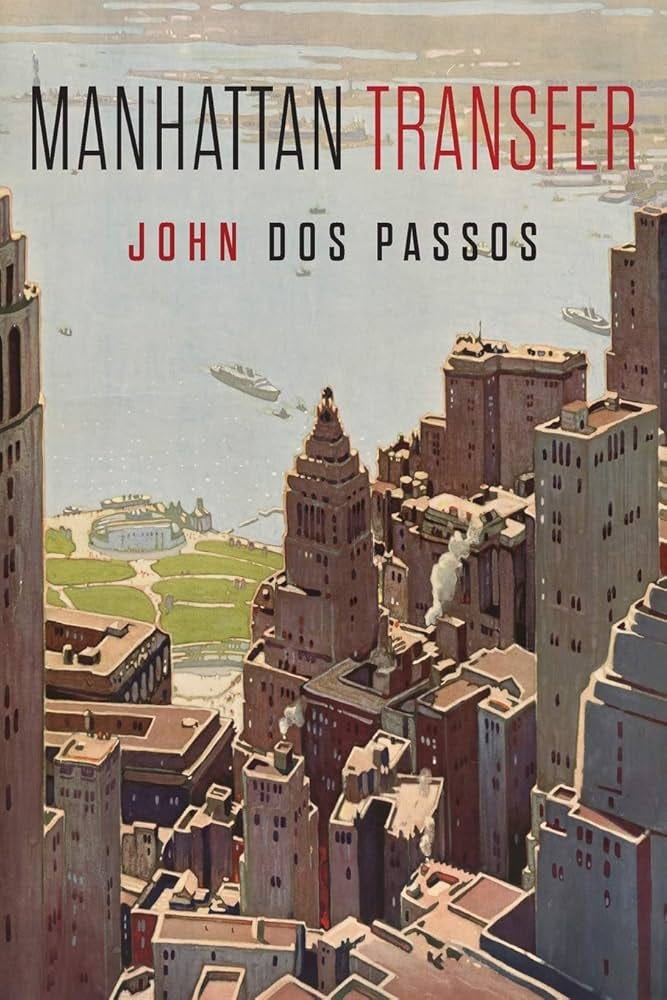
One of my favorite novelists, D.H. Lawrence, described Manhattan Transfer, the fourth novel by American writer John Dos Passos, first published in 1925, as “the best modern book about New York,” delighting in its “endless series of glimpses of people in the vast scuffle of Manhattan Island,” and seeing the work as “a very complete film.” A staple of American modernist literature, the novel presents a vivid and fragmented portrayal of life in New York City during the early 20th century, amid the transition from the Gilded Age to the Jazz. It doesn’t follow a single set plotline nor central character, but rather features a wide cast of characters whose lives intersect and diverge in the bustling metropolis, wrenched and rendered through Dos Passos’s kaleidoscopic collage-like style, which employs vignettes, stream-of-consciousness, and dialogue snippets to construct the mosaic of urban life. This stylistic structure, imbued with newspaper headlines, popular songs, and advertisements, calls to mind other modernist masters like Joyce and Döblin, whose works, doubtless like Dos Passos’s, evoke an overwhelmingly sensory city experience, reflecting the influence of culture, mass media, and the changing tides of time that defined the turn of the twentieth century. Now, Dos Passos’s novel is regarded as one of the major American works of that era, renowned for capturing the spirit of the Jazz Age and the complexities of urban life, while offering a critical view of the social and economic forces shaping the modern city. Like D.H. Lawrence, writers Sinclair Lewis and Ernest Hemingway were big fans of the book, which only bolsters my interest in picking this one up.
Book Still on the Mind: Good Morning, Midnight by Jean Rhys
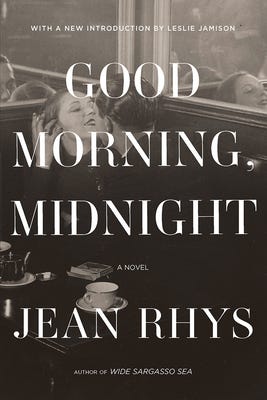
It’s been more than two years since I first discovered the work of English novelist Jean Rhys, whose 1939 fourth novel Good Morning, Midnight was an assigned read for a Modernism course during my undergrad. Set in Paris in between the two World Wars, the novel follows narrator-protagonist Sasha Jansen, a middle-aged woman who, despite her keen intelligence, awareness, and introspection, is burdened by a pervasive sense of restlessness. Torn between a yearning for connection and a compulsion to isolate herself, Sasha spends most of her time alone, either in her hotel room, succumbed to dreamless slumber, or wandering aimlessly around the city, frequenting the pubs and drinking to the point of numbness. As the story unfolds, Sasha encounters various individuals, many men, who attempt to offer her assistance, hoping to rescue her from her self-destructive tendencies; however, her deep-seated mistrust and fear of vulnerability lead her to spurn their help. But it is through her weariness and her repeated bouts of debauchery that the reader gains a glimpse of the dark and tragic past that hides behind Sasha’s actions, a deep personal trauma that, coupled with the oppressive societal norms of her time, works to reveal the complex forces that hinder her pursuit of happiness. I remember falling into this novel when I first read it, mesmerized by Rhys’s fragmented prose style, in whose brief vignettes both the psychological and physical workings of our flâneuse Sasha manifest and are explored in their great complexity. It was ultimately a heartbreaking read (as is the case with other works of Rhys) but one that inspired numerous interpretations. I remember too how I nearly wrote my final paper on it for that class, and I am sure that if and when I decide to revisit this novel, I won’t be able to stop myself from writing an in-depth piece about it, finally plumbing its depths and exploring one of the countless critical insights to be found inside its pages.
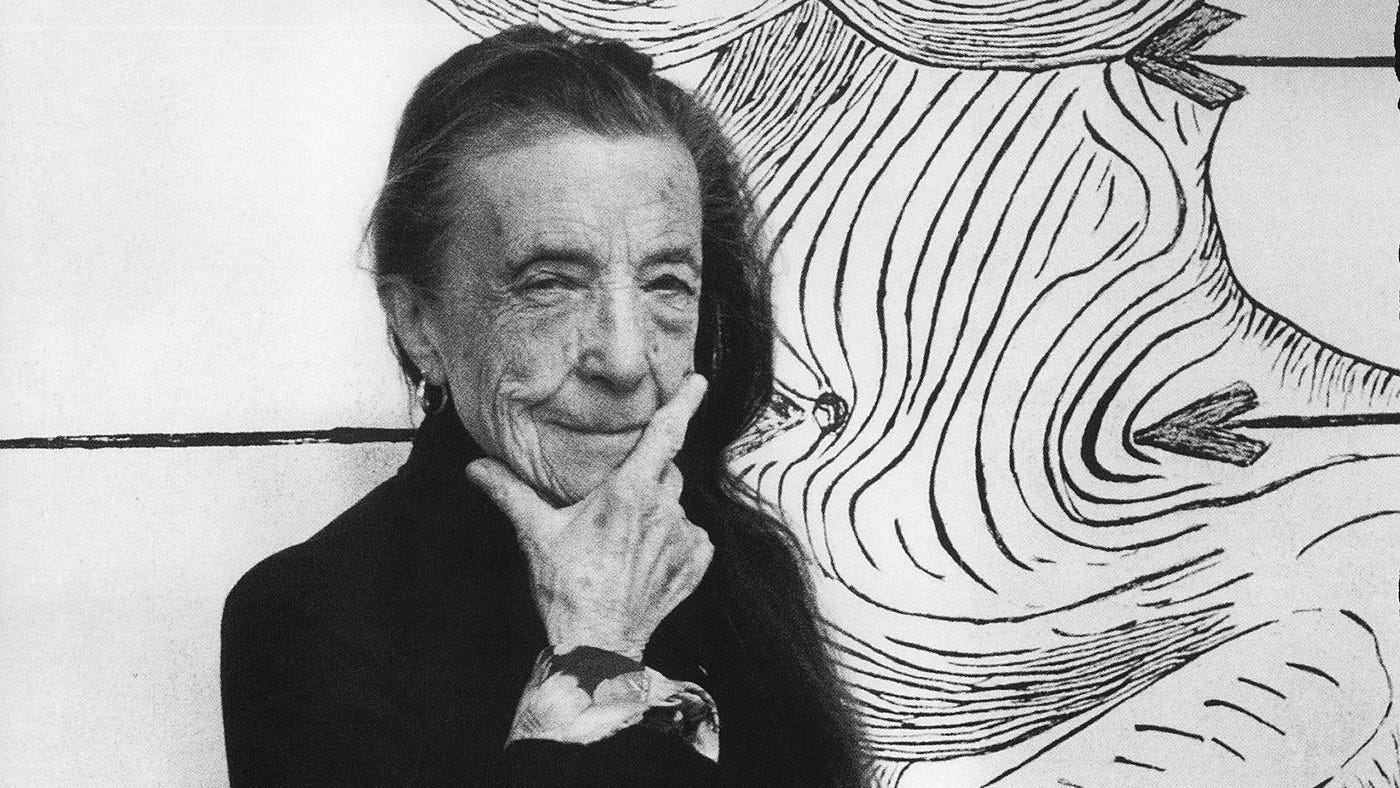
Art(ist) of the Week: “Maman” by Louise Bourgeois (1999)
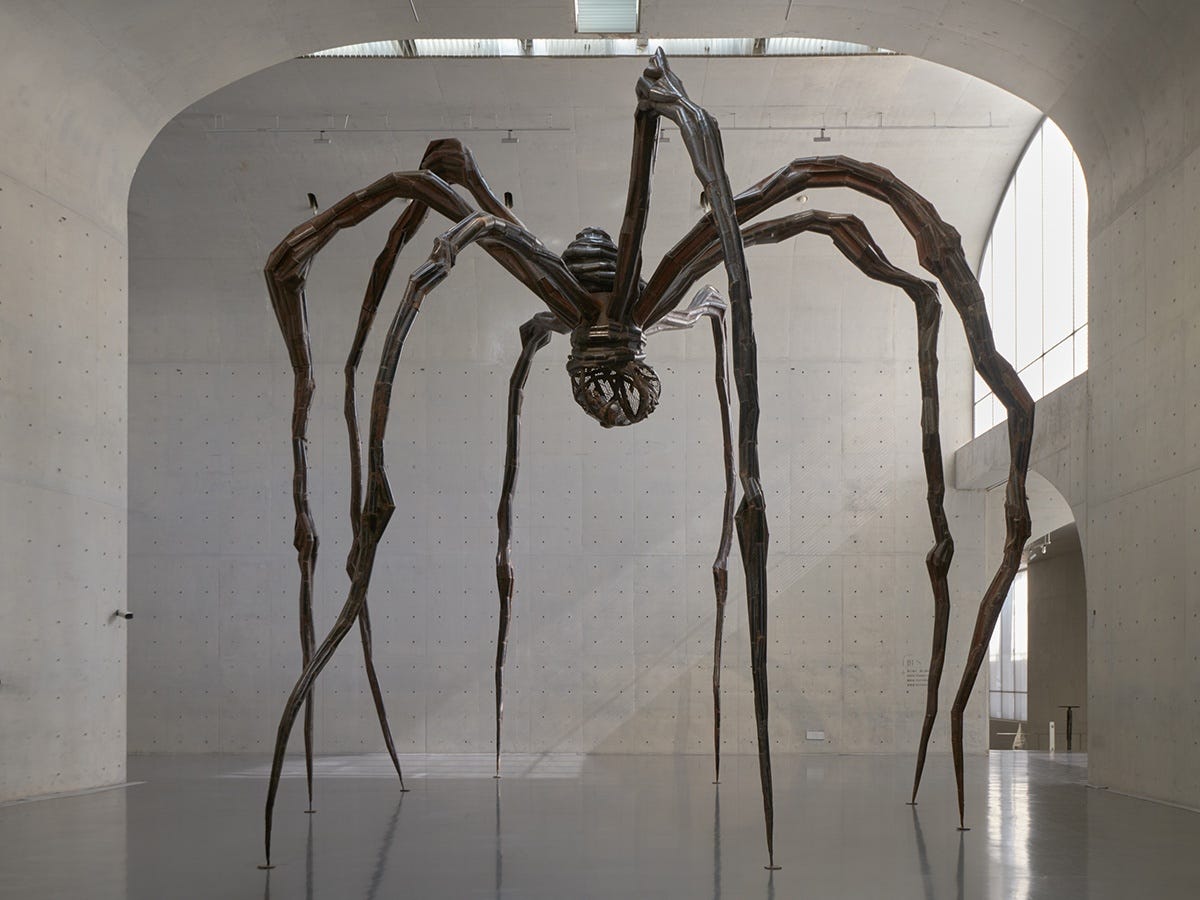
Over the past few weeks, I’ve been flipping through Kate Zambreno’s Book of Mutter, a kind of fractured memoir of sorts, written in terse, poetic lines spanning the details of Zambreno’s childhood and her relationship with her mother, as well as traipsing into the trademark Zambrenotic territory of literary, art, and film criticism. One of the artists Zambreno writes about is the French-American artist Louise Bourgeois, renowned for her massive sculptures and installation pieces, as well as her paintings and prints. Among Bourgeois’s most famous works is “Maman,” a bronze, stainless steel, and marble sculpture of a spider that stands over thirty feet high and wide and which carries a sac of thirty-two marble eggs suspended from the spider’s abdomen centered inside its eight towering, spindly legs. Appearing at once imposing yet delicate, “Maman” exudes a frightening sense of grace, inviting viewers to walk underneath its open structure, making its experience more immersive and visceral. “Maman” is the French word for “mother,” and the sculpture itself is an ode to Bourgeois’s own. About her piece, Bourgeois wrote, “Like a spider, my mother was a weaver. My family was in the business of tapestry restoration, and my mother was in charge of the workshop. Like spiders, my mother was very clever. Spiders are friendly presences that eat mosquitoes. We know that mosquitoes spread diseases and are therefore unwanted. So, spiders are helpful and protective, just like my mother.” Critics also note how the sculpture embodies both the positive and negative aspects of motherhood, symbolizing strength, protection, and resilience, as well as feelings of fear and vulnerability. Multiple editions of “Maman” exist, having been displayed in various location around the world, including the Tate Modern in London, the Guggenheim Museum in Bilbao, and the National Gallery of Canada in Ottawa. I personally hope to one day see this iconic piece in person and bask in the mingled fear-intrigue it so powerfully inspires.
Music(ian) of the Week: “Seven Wonders” by Fleetwood Mac
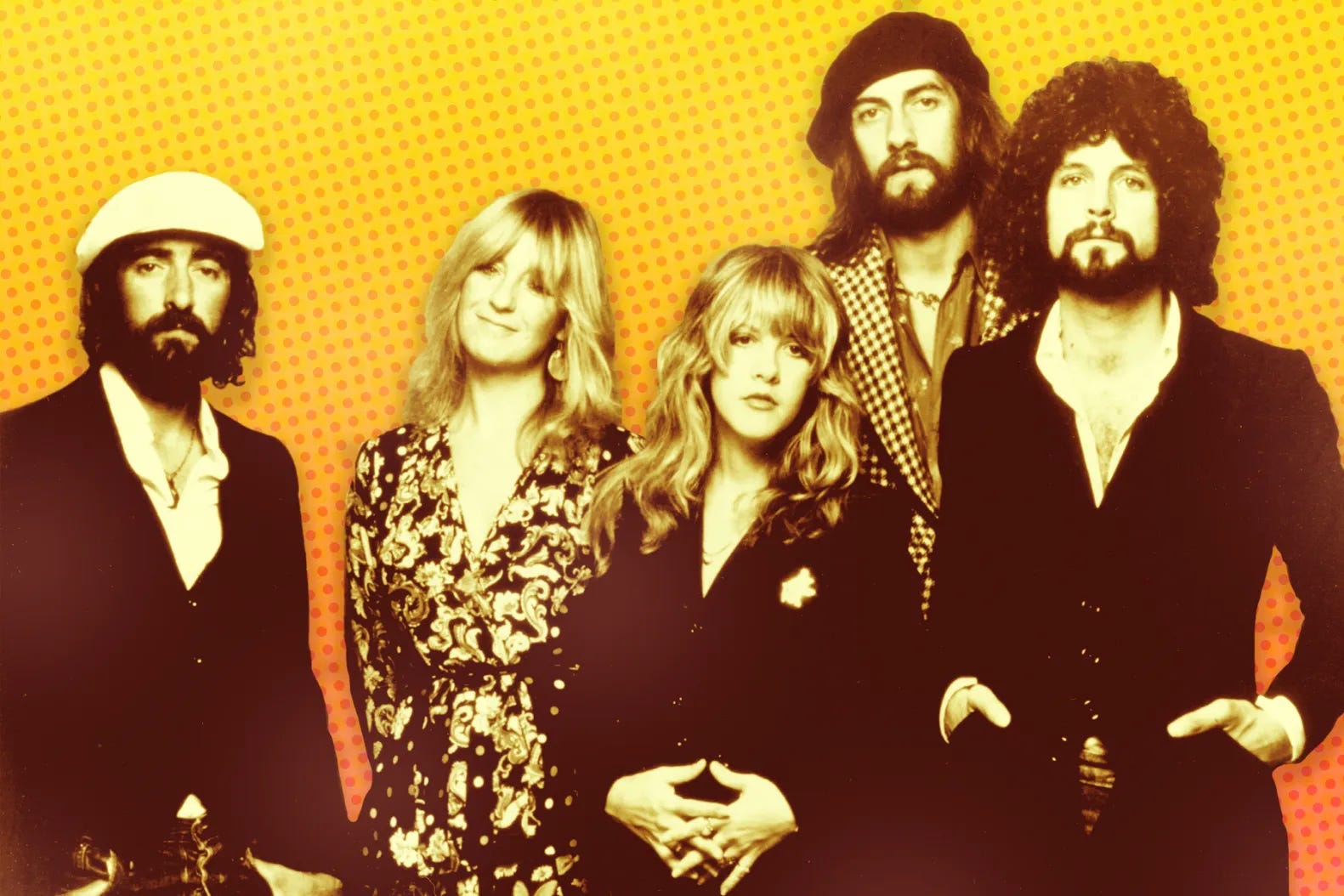
The brief autumnal augury that flowed through the wind of last week prompted me to rewatch one of my favorite fall shows, American Horror Story: Coven, whose witchy vibes never fail to incite my excitement for spooky season. It’s definitely up there as one of my favorite AHS seasons for countless reasons, not the least of which is the fact that famed singer-songwriter Stevie Nicks has a cameo in the show, and her famous Fleetwood Mac classic track “Seven Wonders” is given its own musical rendition. After the episode that features it, I couldn’t get this catchy earworm of a tune out of my head for the life of me, but fortunately, it’s a song which one can truly never grow tired of, so wondrously sonorous and mystically melodious it is. It’s the second track from the band’s 1987 fourteenth studio album Tango in the Night, and as the second single from the album, it peaked at number 19 on the US Billboard Top 100 in August of the same year. In the lyrics, Nicks reminisces on a past love, whose visceral beauty could trounce all others, even that inspired by seeing all the Seven Wonders of the World. She sings in that wonderfully catchy chorus: “If I live to see the Seven Wonders/ I’ll make a path to the rainbow’s end/ I’ll never live to match the beauty again.” In the timbre of Nicks’s voice, in that distinctive rasp whose full-bodied strength and power soar above the instrumentation, one can glean a mixed pleasure and pain, a sad jouissance of sorts that captures the forlorn, lovelorn remembrance with both delight and despondency. The song is almost cinematic in the way it inspires such a story in the mind of the listener, not to mention the intensity of emotion invoked by her intonation. I love this tune so much, and the AHS rendition rivals that of the original, amplifying the magnificence contained in this one musical masterwork.
Wild Card: “Murdur Durdur” – SNL skit
Per another fantastic recommendation from a close friend, I watched Mare of Easttown last weekend, unable to stop myself from binging its seven episodes nor unglue myself from the screen all the while. English actress Kate Winslet plays hardened detective sergeant Mare Sheehan working in the Philadelphia suburbs, investigating a string of murders and missing persons with her police partner Detective Colin Zabel, played by Evan Peters of AHS fame. The lives and stories of various other characters weave in and out, suspiring the suspense that crescendos across the single season, ramping up to an explosive end. This drama captivated me from start to finish, the story and performances reminding me of the top-tier television I tend to overlook. But one of the great aspects of this show is Kate Winslet’s spot-on Delco accent, which I was delighted to discover inspired a parody produced by the satirical specialists at Saturday Night Live. The spoofing sketch features Kate McKinnon as Mare’s parodic analog, Care, whose over-exaggerated Delco drawl never fails to make me laugh.