
The Eighty-first
Friday, January 30th, 2026

“How often the prospect of future happiness is thus sacrificed to one’s impatient insistence upon an immediate gratification!” - Marcel Proust, In Search of Lost Time Volume 1: Swann’s Way (p. 389)
Book in the Pipeline: The Fountain Overflows by Rebecca West
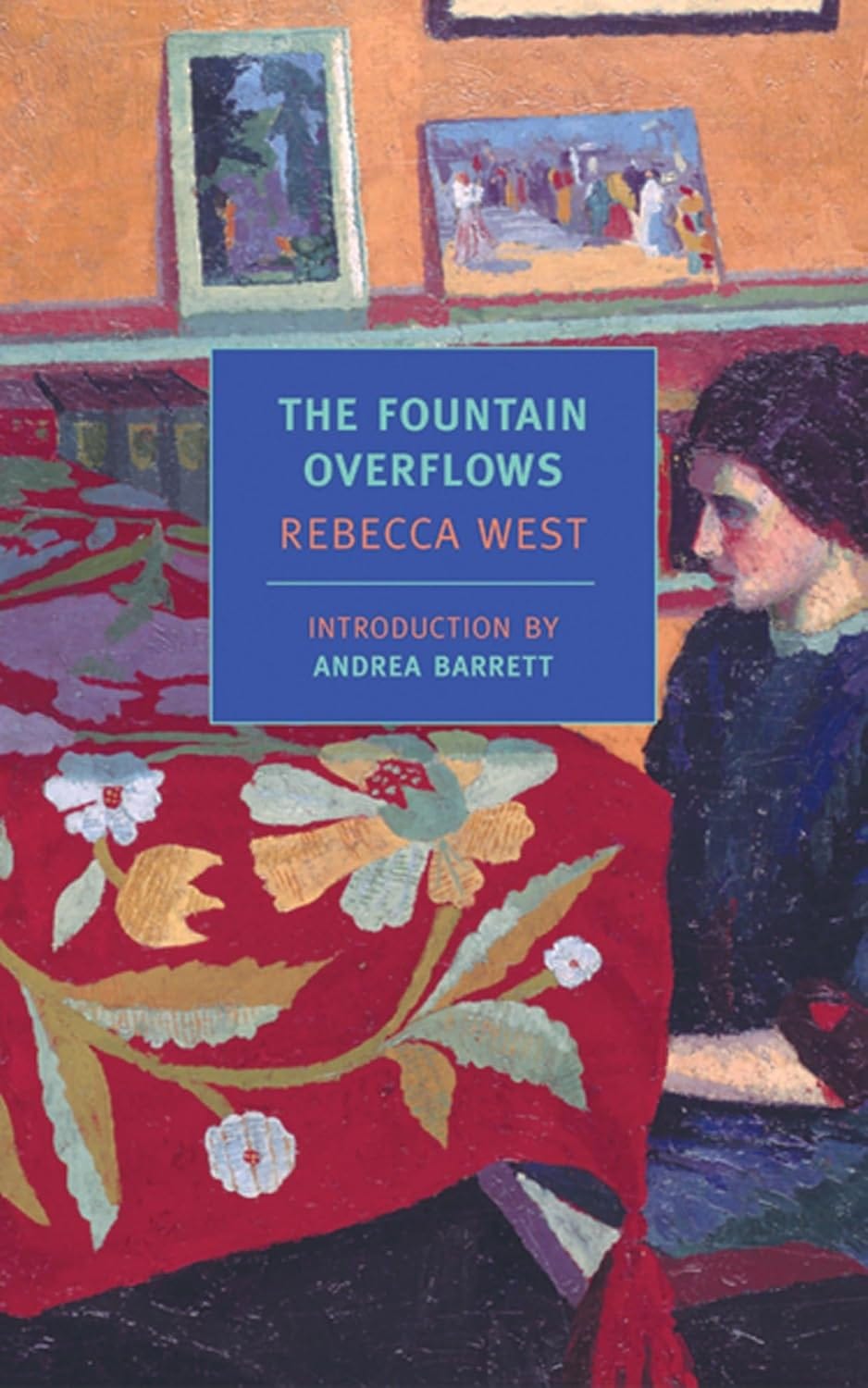
In undergrad, I took a class called “The Modern Novel,” and our first assigned reading was The Return of the Soldier by British novelist Rebecca West, an incredible, slim work which I wrote about here. But I remember chatting with my professor about the author, and she had told me her favorite of West’s work was in fact a novel called The Fountain Overflows, which she had read as a young adult. Published in 1956, this semi-autobiographical novel is a coming-of-age story set Edwardian England filtered through the eyes and voice of Rose Aubrey as she grows up in a volatile household ruled by her mother Clare, a concert pianist of wide acclaim whose artistic ambitions shape all aspects of their family life, and her charming yet feckless father, Piers, whose financial instability compounds the struggles already facing their household. The novel unfolds as a series of domestic crises and small victories that trace Rose’s passage from naïve admiration of her parents to a clear-eyed understanding of love, responsibility, and the costs of genius. It seems to me a novel that falls into a literary camp I love so much: a bildungsroman of dramatic proportions, a story of a dysfunctional family whose trials and tribulations give rise to world-shattering revelations (the work of Christina Stead comes to mind). Yet also, I hear that it’s written with West’s signature wit, balancing comedy and hardship to capture childhood not as innocence lost but as a training ground for clarity and independence. Since I read The Return of the Soldier in January of 2022, I’m well overdue for another West, so I can see reading The Fountain Overflows in the near future.
Book Still on the Mind: Black Wings Has My Angel by Elliott Chaze
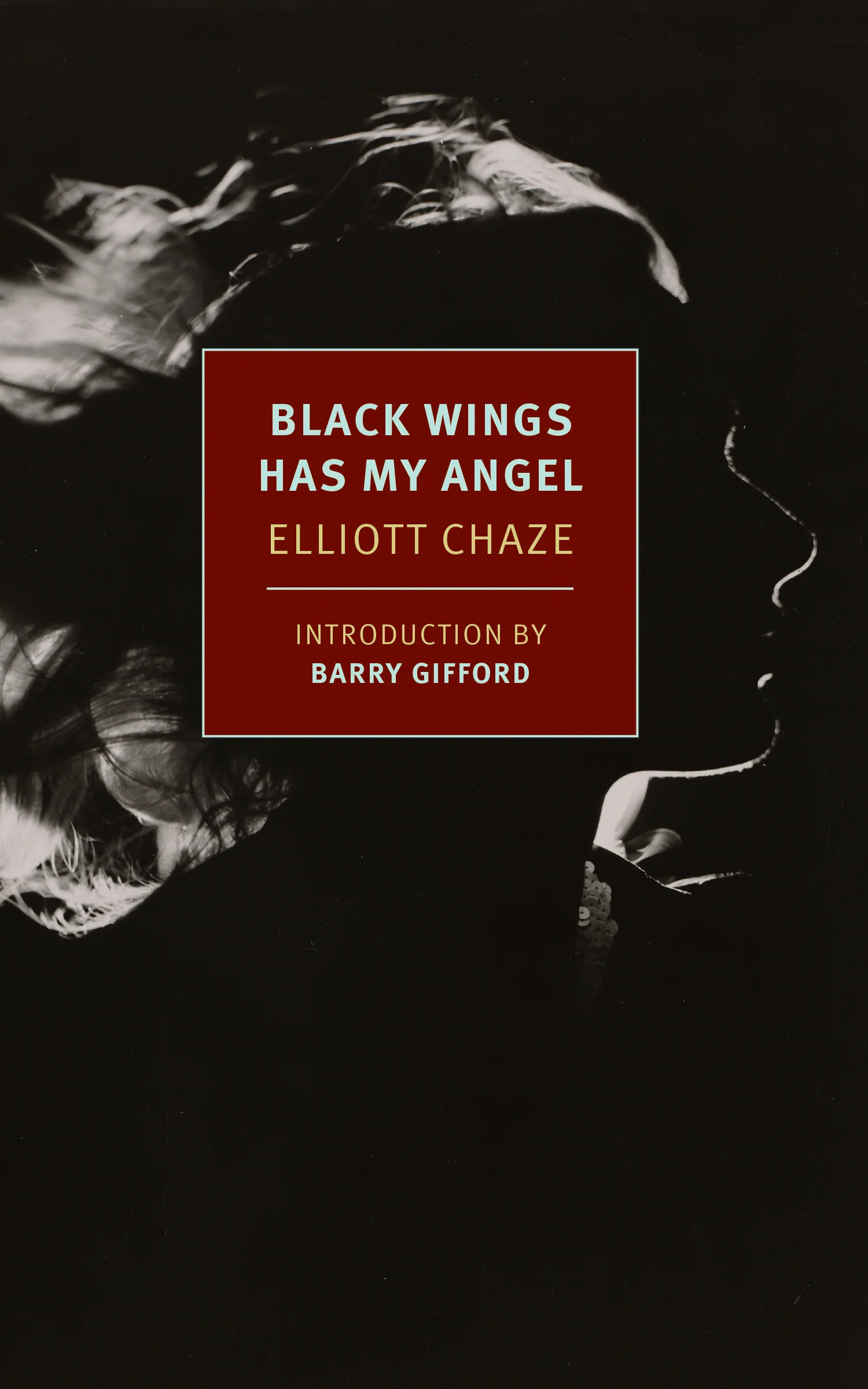
Snowy winters have a way of dimming the world to black and white, quieting city streets the light of whose streetlamps brood more than brighten. With this kind of atmosphere, I always find myself drawn to noir fiction—stories of sinners and seedy back alleyways, where detectives and outlaws alike pace through the cold, smoke wisps ringing from cigarettes, their secrets stored in shadow and slush. So, it’s no wonder that I recall the classic crime novel Black Wings Has My Angel by Elliot Chaze, published in 1953, which I read back in May of 2022. It follows two lovers bound as much by desire as by doomed ambition. Tim Sunblade, a twenty-seven-year-old ex-con freshly out of prison, spends his days on a drilling rig and his nights in a fleabag motel, living cautiously until he meets Virginia, a blonde, lavender-eyed call girl whose cool nerve and appetite for cash mirror his own felonious instincts. What begins as a one-night stand quickly swells into obsession, romance, and a shared fantasy of escape. Recognizing in each other a perfect accomplice, Tim and Virginia set off on a multi-state crime spree, chasing wealth and reckless abandon. But as their partnership deepens, so too do mistrust, paranoia, and betrayal, driving their love-and-crime pact toward a violent, inexorable finale that rivals the true story of Bonnie and Clyde. I remember speeding through this short work, chasing Chaze’s characters through their exhilarating travails, which often had me on the edge of my seat—a tough-as-nails, fast-paced outlaw love story and hardboiled noir narrative that’s perfect to complement the unsettling cold of this season.
Art(ist) of the Week: “Mount Vesuvius in Eruption” by J.M.W. Turner (1817)
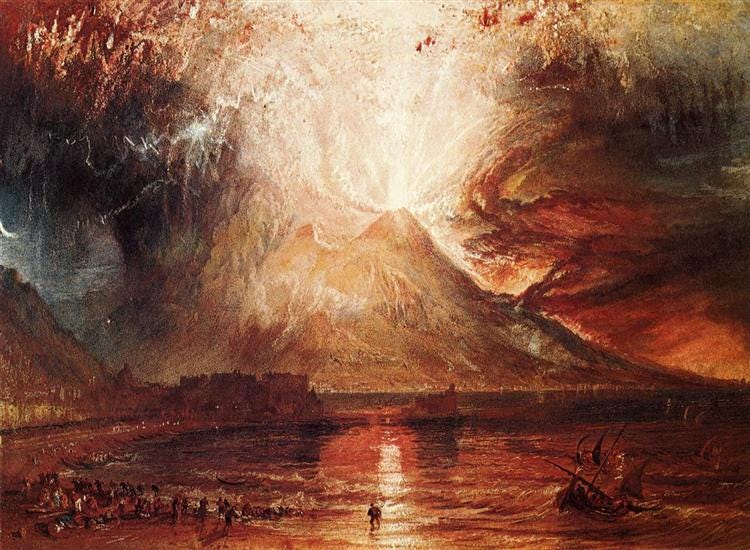
As accompaniment in my literary journey through Proust this year, I’m working my way through painter Eric Karpeles’s Paintings in Proust, the comprehensive coffee-table compendium cataloging all the artworks mentioned throughout In Search of Lost Time. Early in Swann’s Way, the narrator’s grandmother gifts him novels by George Sand, a gesture which, as he describes, intimates the way she preferred to give gifts with artistic and aesthetic value, favoring paintings over photographs for instance, “to introduce, as it were, several ‘thicknesses’ of art” (53-54). As an example, the narrator cites English Romantic painter Joseph Mallord William Turner’s 1817 painting “Mount Vesuvius in Eruption.” In this devastatingly powerful picture, Turner transforms Mt. Vesuvius into a living force of sublime terror, its monolithic cone erupting into a convulsion of fire, smoke, and molten light that tears through the night sky. Rivers of lava pour downward like veins of flame, casting a lurid glow over the surrounding land and sea, while clouds of ash and vapor coil and billow in a cataclysm of turbulence. And this apocalypse unfolds as wanderers watch from the shore below, the conflagration reducing them to fragile silhouettes overwhelmed by nature’s elemental violence. I was dumbstruck when I turned to it in Karpeles’s book, overtaken by its enormity, its viciousness. Turner’s immaculate brushwork dissolves solid form into atmosphere, blurring earth, sky, and fire into a single fearsome vision, capturing within frame less the record of an event than the experience of awe and terror which watchers surely felt in the face of such a catastrophe.
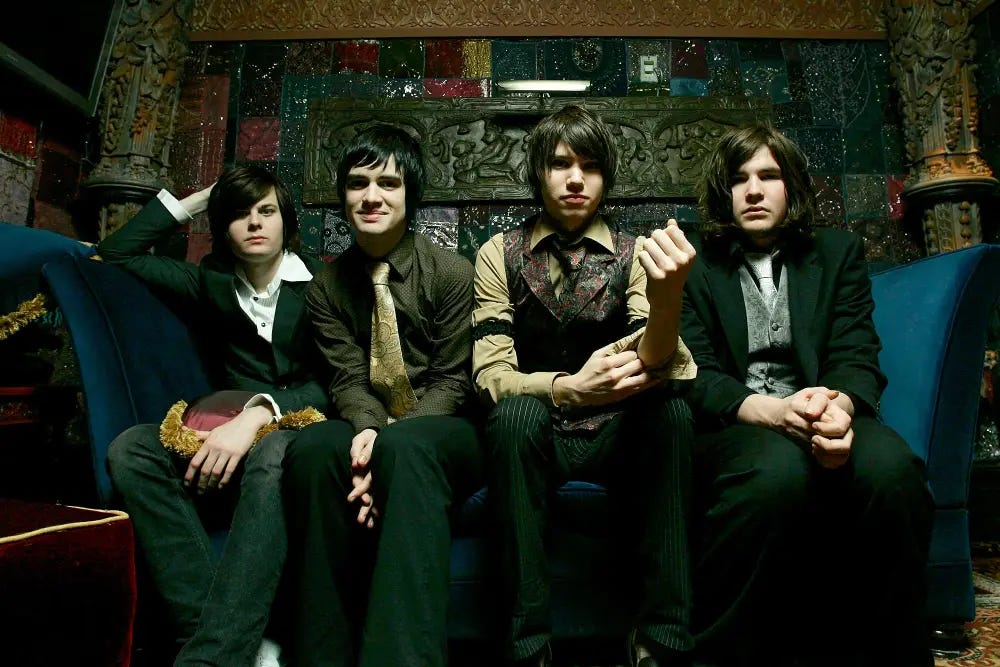
Music(ian) of the Week: A Fever You Can’t Sweat Out by Panic! At the Disco
Last Friday saw the release of the 20th Anniversary Deluxe edition of one of my favorite albums of all time: A Fever You Can’t Sweat Out by American pop punk band Panic! At the Disco. This debut album, originally released in 2005, defined my childhood and early adolescence in ways which no other record has. Former emo kids will attest how revolutionary it truly was when it came out: a record, written by teenagers (the boys had graduated high school a month before recording it), that took the world by storm, shattering the charts and redefining a genre that was only still in its infancy. Two decades later and not only do these tunes still see radio airtime but when “I Write Sins Not Tragedies” comes on at the bar, there’s not a single millennial that doesn’t mouth the lyrics, if not scream along with Brendon Urie’s vigorous vocals. I still know every word to every song, every note in the symphony that is this incredible album, an opus characterized by the band’s early signature blend of carnivalesque cabaret, vaudevillian visuals, beautifully baroque compositions, and poetic lyrics that spell a story of youthful desire and self-invention, where romance, ego, and performance blur into one, revealing the ways that intimacy and ambition slowly curdle into disillusionment. Today, with twenty years now past, the album rings with a distinct nostalgia of one of the greatest eras of music. And fortunately for us emo-kids-turned-adults, we can relive that era with this newly mastered video of what is surely Panic!’s most iconic performance, Live in Denver, whose audio recording is also included in this new deluxe edition of their album.
Wild Card: Grand Theft Hamlet
Over chai teas at Solar Myth a couple weekends back, a friend told me about how she had recently watched a documentary called Grand Theft Hamlet. At first, I couldn’t make sense of what she had said: Grand Theft as in the video game Grand Theft Auto? and Shakespeare’s Hamlet? She told me how, in 2021, during the COVID lockdown, there was a group of English gamers who attempted to put on a virtual production of Shakespeare’s Hamlet within the video game Grand Theft Auto Online, an arduous months-long undertaking that involved recruiting, auditioning, and casting players, learning and rehearsing the show, then finally putting it on before a virtual audience, all the while avoiding malicious players hellbent on offing them. And they were successful. Those familiar with the game, with its mindless violence and unbridled freedom to fulfill any felonious fantasy, will understand what a feat this endeavor truly was. But not only is it a feat that they achieved it—casting, directing, and producing the play within the game—but on top of that, they documented it from the start with an avatar playing the documentarian who followed and interviewed the players, and “filmed” the process from beginning to end. That film became Grand Theft Hamlet, which was released in 2024. It’s ridiculous, hilarious, surprisingly somber, incredibly impressive, wholesome, and wonderfully fun. Available to watch on Mubi, I recommend it to anyone needing a laugh, a reminder of the strange ways people can connect with each other, or proof of how ambitiously weird people can be.